

How to Improve Dog Oral Hygiene: A 2026 Guide
Table of Contents
- Why Dog Oral Hygiene Matters More Than Most Owners Realize
- Signs of Periodontal Disease in Dogs
- How to Brush Your Dog's Teeth: Step-by-Step Desensitization
- How to Remove Tartar from Dog Teeth at Home
- Best Dog Dental Care Products: What Actually Works
- Professional Veterinary Cleaning vs. Home Dog Oral Hygiene Care
- Building a Daily Dog Dental Routine That Sticks
- Conclusion
Last Updated: August 26, 2026
Why Dog Oral Hygiene Matters More Than Most Owners Realize
Most pet owners think bad breath is just a dog thing. It's not. It's an early warning sign of a problem that, left untreated, can lead to tooth loss, chronic pain, and systemic health complications. Dog oral hygiene isn't a cosmetic concern, it's a genuine health priority.
At PROTEITH®, we've spent considerable time researching the connection between oral bacteria and whole-body wellness, and what we see in dogs mirrors what we see in humans: the mouth is the gateway. Periodontal disease affects the majority of dogs by age three, according to American Veterinary Medical Association oral health guidelines. That's not a statistic to skim past. It means most dogs are already developing dental disease before they're fully out of puppyhood.
The good news is that learning how to improve dog oral hygiene doesn't require expensive equipment or a veterinary degree. It requires consistency, the right products, and an understanding of what you're actually fighting. Below, we'll cover everything from reading early warning signs to building a daily routine that actually sticks.
Breed-Specific Dental Risks Worth Knowing
Not all dogs face equal dental risk. Brachycephalic breeds, think Bulldogs, Pugs, Shih Tzus, and Cavalier King Charles Spaniels, have compressed jaw structures that crowd teeth together, creating tight spaces where plaque accumulates rapidly. Small breeds like Chihuahuas, Yorkshire Terriers, and Dachshunds also face disproportionately high rates of periodontal disease because their teeth are large relative to their jaw size.
Giant breeds, by contrast, tend to have better natural spacing but are more prone to tooth fractures from aggressive chewing. Knowing your dog's breed profile changes how proactively you need to approach home care.
Signs of Periodontal Disease in Dogs
Periodontal disease in dogs is the progressive infection and inflammation of the structures supporting the teeth, including the gums, ligaments, and bone. It develops in four stages, from mild gingivitis to irreversible bone loss, and it's largely silent until it's advanced.
Early Warning Signs vs. Advanced Disease
Catching it early is the entire game. Here's what to watch for:
Early signs (Stage 1-2):
- Persistent bad breath that doesn't improve after eating
- Red or swollen gum tissue, especially along the gum line
- Yellow-brown tartar buildup on canine molars and canine incisors
- Slight bleeding when touching the gums
Advanced signs (Stage 3-4):
- Loose or missing teeth
- Visible pus or discharge near the gum line
- Difficulty chewing, dropping food, or favoring one side
- Receding gums that expose tooth roots
- Pawing at the mouth or face
The distinction matters because Stage 1 and 2 disease is reversible with proper home care and professional cleaning. Stage 3 and 4 involve permanent structural damage. If you're seeing any of the advanced signs, schedule a veterinary examination immediately, home care alone won't resolve it.
How to Brush Your Dog's Teeth: Step-by-Step Desensitization
Brushing is the single most effective method for controlling plaque before it mineralizes into tartar. The problem isn't the technique, it's the introduction. Dogs that are forced into tooth brushing become resistant fast. The desensitization approach below takes longer upfront but produces a dog that tolerates brushing reliably.
Work through these steps over one to three weeks, never rushing to the next stage until your dog is relaxed at the current one.
- Days 1-3: Touch tolerance. With your dog calm, gently lift their lip and touch their teeth and gums with your finger for a few seconds. Reward immediately with praise or a treat.
- Days 4-6: Introduce toothpaste flavor. Let your dog lick a small amount of canine toothpaste from your finger. Most dogs respond well to poultry or vanilla-mint flavors. Never use human toothpaste, the xylitol and fluoride levels are toxic to dogs.
- Days 7-10: Finger brushing. Wrap gauze around your finger or use a finger brush. Make small circular motions along the outer surfaces of the teeth, focusing on the gum line where plaque concentrates. Keep sessions under 30 seconds.
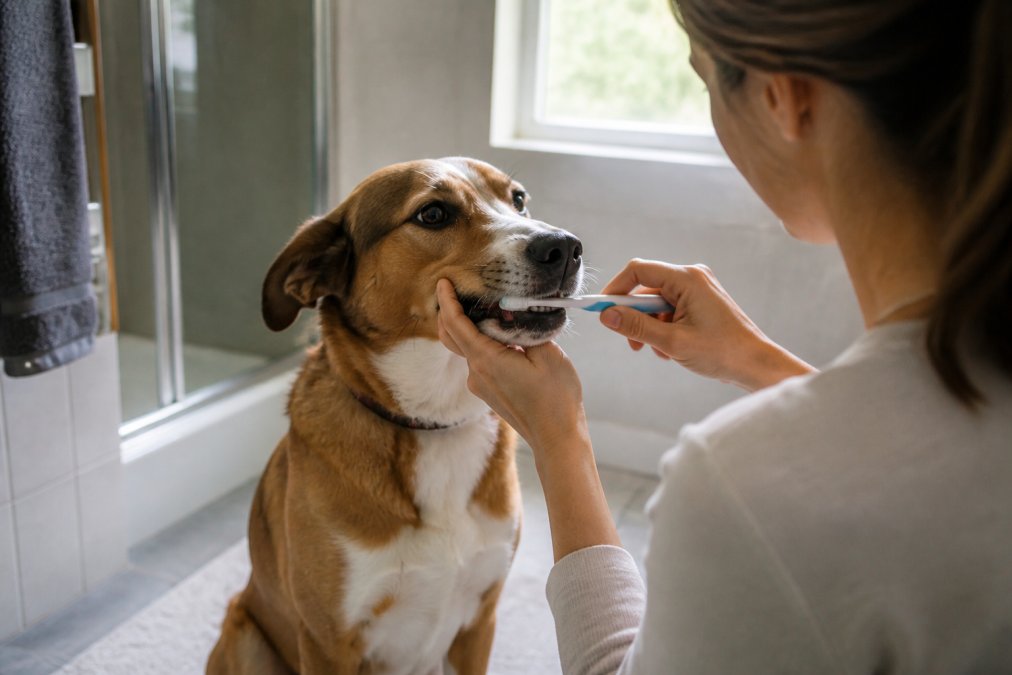
- Days 11-14: Introduce the toothbrush. Let your dog sniff and lick the soft-bristled toothbrush before using it. Apply toothpaste and brush with gentle circular strokes, starting with the easiest-to-reach front teeth.
- Week 3+: Full brushing routine. Work toward brushing all surfaces, outer, inner, and chewing surfaces, in a 1-2 minute session. Daily is the goal. Three times weekly is the minimum to see meaningful plaque reduction.
Choosing the Right Canine Toothpaste and Toothbrush
A soft-bristled toothbrush sized for your dog's mouth is non-negotiable. Brushes that are too large skip over the gum line; brushes that are too firm damage gum tissue.
For toothpaste, enzymatic toothpaste is a common recommendation. Enzymatic formulas contain glucose oxidase and lactoperoxidase, which generate antimicrobial compounds that continue working between brushing sessions. This matters because you're not rinsing after brushing, the residual formula keeps working.
Ingredient Safety: What to Avoid in Dog Toothpaste
This is where most guides fall short. Ingredient scrutiny isn't optional when your dog is swallowing the product.
Avoid these ingredients:
- Xylitol: Causes rapid insulin release and can be fatal in dogs even in small amounts
- Fluoride: Safe for humans who spit; toxic for dogs who swallow
- Sodium lauryl sulfate (SLS): A foaming agent that irritates oral mucosa with repeated exposure
- Artificial sweeteners and synthetic preservatives: Unnecessary and potentially irritating to the canine digestive tract
- Harsh abrasives: Silica and calcium carbonate can wear enamel with daily use
Look for products that are transparent about their full ingredient list and formulated specifically for swallowing. Natural, microbiome-friendly formulas that avoid harsh chemicals are a safer long-term choice for daily use.
How to Remove Tartar from Dog Teeth at Home
Tartar is calcified plaque, once it hardens onto the tooth surface, a toothbrush alone cannot remove it. This is the point where many owners feel stuck. The honest answer is that significant tartar buildup requires professional scaling. But you can slow its formation dramatically and soften early-stage deposits with the right home approach.
The most effective strategy is prevention: brush before plaque mineralizes. Plaque typically begins calcifying within 24-72 hours of forming, which is why daily brushing matters more than vigorous occasional brushing.
Dental Chews, Water Additives, and Oral Wipes
These tools don't replace brushing, but they're valuable additions to a complete dog oral hygiene routine, particularly for dogs who resist brushing.
| Product Type | How It Works | Best For | Limitation |
|---|---|---|---|
| Dental chews | Mechanical abrasion while chewing | Dogs who accept treats easily | Caloric cost; inconsistent contact |
| Water additives | Antimicrobial agents dispersed through drinking | All dogs; zero compliance required | Lower efficacy than brushing |
| Oral wipes | Manual plaque removal without a brush | Dogs resistant to toothbrushes | Can't reach between teeth |
| Enzymatic toothpaste | Enzymatic action reduces bacterial buildup | Daily brushing routine | Requires brushing compliance |
Look for dental chews that carry the Veterinary Oral Health Council (VOHC) seal, this indicates the product has met defined standards for plaque or tartar reduction in clinical trials, as noted by Veterinary Oral Health Council accepted product guidelines.
Water additives vary widely in formulation. The most effective contain chlorhexidine or zinc compounds that reduce bacterial load in the oral cavity. Check that the product is specifically approved for pet use before adding it to your dog's water bowl.
Best Dog Dental Care Products: What Actually Works
The market for dog dental products is crowded, and not all of it is backed by meaningful evidence. Here's a practical framework for evaluating what you're buying.
What to prioritize:
- VOHC seal for chews and additives
- Enzymatic formula for toothpaste
- Soft-bristled, appropriately sized brush
- Ingredient transparency, full list, no vague "natural flavors" hiding problematic compounds
- Formulated for swallowing, not rinsing
What to skip:
- Sprays or gels that claim to eliminate tartar without mechanical action
- Products with incomplete ingredient disclosure
- Human toothpaste marketed as "safe for pets" in small amounts, it isn't
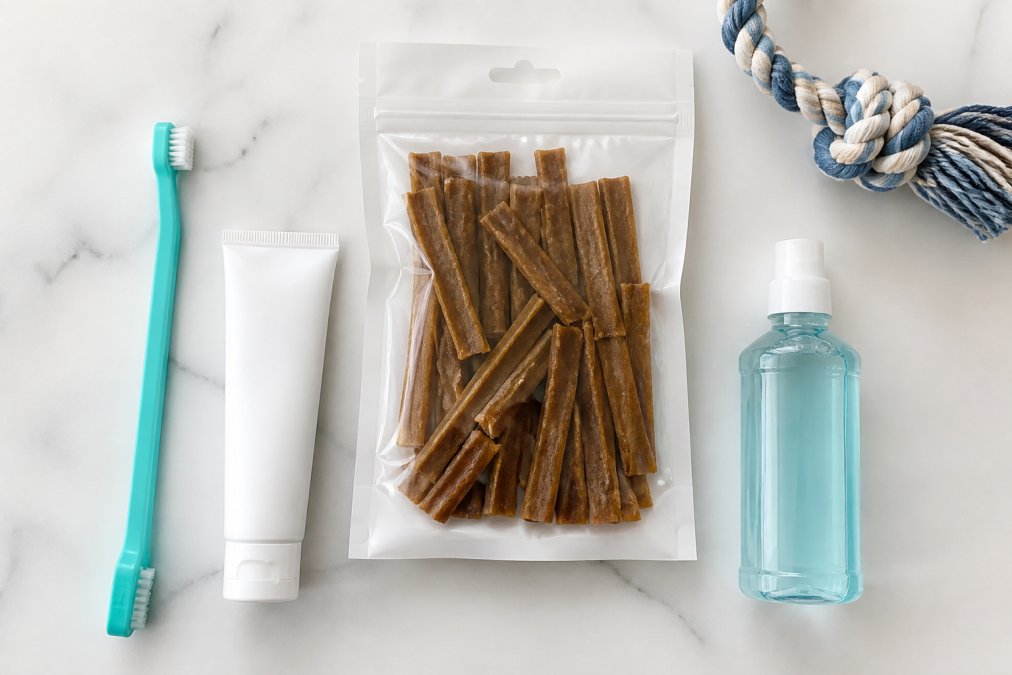
For owners who want a product that goes beyond surface-level cleaning, PROTEITH® offers a microbiome-friendly formula built on proteolytic technology that reduces the bacterial populations responsible for plaque and tartar formation. PROTEITH®'s approach targets bacterial buildup, and because it's free from harsh abrasives and synthetic additives, it's safe for daily use on pets who swallow the product.
Professional Veterinary Cleaning vs. Home Dog Oral Hygiene Care
Professional veterinary cleaning and home care are not competing strategies. They're complementary. Home care slows disease progression between cleanings; professional cleaning addresses what home care cannot reach.
Professional cleaning involves scaling above and below the gum line under general anesthesia, followed by polishing to smooth the tooth surface and reduce future plaque adhesion. Anesthesia is required because a conscious dog cannot hold still for subgingival scaling, and attempting it without anesthesia risks injury and misses the most critical areas.
The cost of professional cleaning varies by region, dog size, and the extent of disease present. Owners who maintain consistent home care routinely find that their dogs need less aggressive intervention at each cleaning, which reduces both procedural time and cost over a dog's lifetime. According to American Animal Hospital Association dental care standards, annual professional examinations are recommended for most adult dogs, with cleaning frequency determined by individual disease risk.
A common mistake is viewing professional cleaning as the primary intervention and home care as optional. The opposite framing is more accurate: home care is the primary intervention, and professional cleaning is the periodic reset that home care makes more effective.
Building a Daily Dog Dental Routine That Sticks
The real challenge isn't knowing what to do, it's doing it consistently. Most owners start strong and fade within two weeks. These structural approaches help.
Anchor the routine to an existing habit. Brushing after your dog's morning walk or after your own evening toothbrushing creates a natural trigger. Habits that require remembering separately rarely survive.
Keep supplies visible and accessible. If the toothbrush is in a cabinet, you'll skip it. A designated spot on the bathroom counter or near the dog's feeding area removes the friction.
Track the first 30 days. A simple checklist on the refrigerator or a habit-tracking app makes the streak visible. Most owners who reach 30 consecutive days maintain the routine long-term.
Build in flexibility. Missing one day doesn't break the routine, treating it as a failure does. Aim for five out of seven days if daily feels unsustainable. That frequency still produces meaningful plaque reduction.
Reward the dog, not just yourself. End every brushing session with something your dog values: a brief play session, a specific treat, or a walk. The association between brushing and reward is what makes the dog cooperative rather than avoidant over time.
Improving dog oral hygiene is genuinely one of the highest-return investments you can make in your pet's long-term health. The tools are simple, the technique is learnable, and the difference between a dog with managed dental disease and one without is measured in years of quality life.
Maintaining strong dog oral hygiene at home significantly reduces the frequency and cost of professional veterinary cleanings, but it requires the right products to be effective. PROTEITH® was developed to address exactly this gap: a clinically validated formula that uses proteolytic technology and microbiome-friendly natural ingredients to reduce the bacterial load responsible for plaque and tartar, without harsh abrasives or synthetic chemicals that accumulate in a pet's system with daily use. It freshens breath, supports healthy gums, and is formulated for safe swallowing. Shop PROTEITH® and give your dog's oral health the foundation it deserves.
Frequently Asked Questions
How often should I brush my dog's teeth to see results?
Daily brushing delivers the best results for dog oral hygiene. Plaque hardens into tartar within 24 to 48 hours, so brushing every day prevents that buildup before it starts. If daily brushing isn't realistic, aim for at least three times per week and supplement with dental chews or water additives on the other days. Most owners notice fresher breath within one to two weeks of consistent brushing, and visible plaque reduction typically follows within a month.
What keeps tartar off a dog's teeth between vet visits?
Daily brushing with an enzymatic canine toothpaste is the most reliable way to slow tartar formation. Enzymatic formulas break down bacterial biofilm before it mineralizes. Dental chews with the Veterinary Oral Health Council (VOHC) seal of acceptance also help by mechanically scrubbing the tooth surface. Water additives and oral wipes provide additional support. None of these fully replace a professional veterinary cleaning once tartar has already hardened onto the tooth surface.
Is it too late to start cleaning my dog's teeth?
It is almost never too late to improve a dog's oral hygiene, though the starting point matters. If your dog already has significant tartar buildup, hardened calculus, or signs of periodontal disease such as red gums or loose teeth, a professional veterinary cleaning under anesthesia should come first. Once the mouth is professionally cleaned, home care becomes far more effective. Starting a daily brushing and dental product routine after a vet cleaning can meaningfully slow the return of tartar and gum inflammation.
What kills bacteria in a dog's mouth?
Enzymatic toothpastes work by producing enzymes that disrupt bacterial cell walls, reducing the bacterial load in the oral cavity. Water additives formulated for dogs often contain antimicrobial compounds that reduce bacterial buildup throughout the day. Dental chews with abrasive textures physically dislodge bacteria-laden plaque from canine molars and incisors. Proteolytic ingredients found in newer oral care formulations can also break down the protein matrix that bacteria use to adhere to tooth surfaces, offering an additional layer of protection.

