

How to Treat Chronic Bad Breath: A 2026 Guide
Table of Contents
- What Makes Chronic Bad Breath Different From Ordinary Halitosis
- Causes of Persistent Halitosis: Why the Problem Keeps Coming Back
- Step-by-Step Morning and Evening Routine to Treat Chronic Bad Breath
- Natural Remedies for Gum Health That Also Fight Bad Breath
- Oral Microbiome Balance: The Missing Piece in Most Breath Treatments
- The Psychological Impact of Chronic Halitosis and Why Treatment Matters
- When to See a Dentist and What Professional Care Covers
- Conclusion
Last Updated: August 26, 2026
What Makes Chronic Bad Breath Different From Ordinary Halitosis
Chronic bad breath is a persistent oral condition in which unpleasant mouth odor recurs daily despite regular brushing or rinsing. It differs from transient bad breath, the temporary kind caused by a garlicky meal or morning mouth, because the underlying source is biological, not situational.
At PROTEITH®, we hear from people who have brushed twice a day for years and still feel self-conscious in close conversation. If your breath returns within an hour of brushing, you are dealing with a chronic condition, not a hygiene lapse.
The core mechanism behind persistent halitosis is the production of volatile sulfur compounds by anaerobic bacteria living in the oral cavity. These bacteria thrive in low-oxygen environments, deep gum pockets, the back of the tongue, and between teeth, and metabolize proteins into hydrogen sulfide and methyl mercaptan. According to the American Dental Association's patient resources on halitosis, the majority of chronic bad breath cases originate in the mouth itself, though systemic conditions can amplify the problem.
What most guides miss is the distinction between addressing the symptom and addressing the source. Breath mints, alcohol-based rinses, and antibacterial mouthwashes suppress volatile sulfur compounds temporarily but do nothing to correct the bacterial imbalance driving production. Treating chronic bad breath requires a more comprehensive approach than a standard hygiene refresh.
Causes of Persistent Halitosis: Why the Problem Keeps Coming Back
Oral Sources: Bacteria, Plaque, and Tongue Coating
The biggest mistake people make is assuming they have covered oral sources because they brush regularly. Dental plaque is a structured bacterial biofilm that adheres to tooth surfaces, gum lines, and restorations. When plaque is not disrupted through thorough flossing and brushing, anaerobic bacteria within it continue producing volatile sulfur compounds around the clock.
Tongue coating is an equally significant contributor. The dorsal surface of the tongue has a textured structure that traps food particles, dead cells, and bacteria in a dense layer. Many people brush their teeth meticulously and never touch their tongue. Research documented by the National Institute of Dental and Craniofacial Research indicates that tongue bacteria account for a substantial portion of oral sulfur compound production.
Periodontal disease and gingivitis create additional reservoirs. Deep gum pockets harbor concentrations of anaerobic bacteria that a toothbrush cannot reach. Tooth decay creates cavities where food particles accumulate and ferment. Both conditions sustain bacterial load well beyond what routine hygiene can clear.
Systemic and Medical Triggers: Dry Mouth, Sinus Issues, and the Gut-Breath Connection
Oral sources explain most cases, but systemic triggers keep the problem coming back even after good oral hygiene is established.
Xerostomia (dry mouth) is a major driver that often goes unaddressed. Saliva is the mouth's natural defense system: it dilutes bacterial byproducts, maintains pH balance, and physically washes away food debris. When saliva production drops, from medications, mouth breathing, dehydration, or certain medical conditions, bacteria multiply faster and volatile sulfur compound levels rise.
Sinus infections and post-nasal drip deliver mucus rich in proteins directly to the back of the throat, where bacteria metabolize it into odorous compounds. The result is a persistent smell that originates above the mouth entirely and does not respond to oral hygiene alone.
The gut-breath connection is less discussed but clinically relevant. Gastroesophageal reflux allows stomach acid and partially digested food to reach the esophagus and oral cavity. Imbalances in gut microbiota can also produce gases that travel upward. If chronic bad breath persists despite excellent oral hygiene, a systemic or gastrointestinal origin deserves investigation.
Step-by-Step Morning and Evening Routine to Treat Chronic Bad Breath
A structured daily routine is the most reliable way to treat chronic bad breath. Sporadic effort produces sporadic results. The goal is to disrupt bacterial biofilm, reduce tongue coating, stimulate saliva production, and maintain low bacterial load across both active and rest periods.
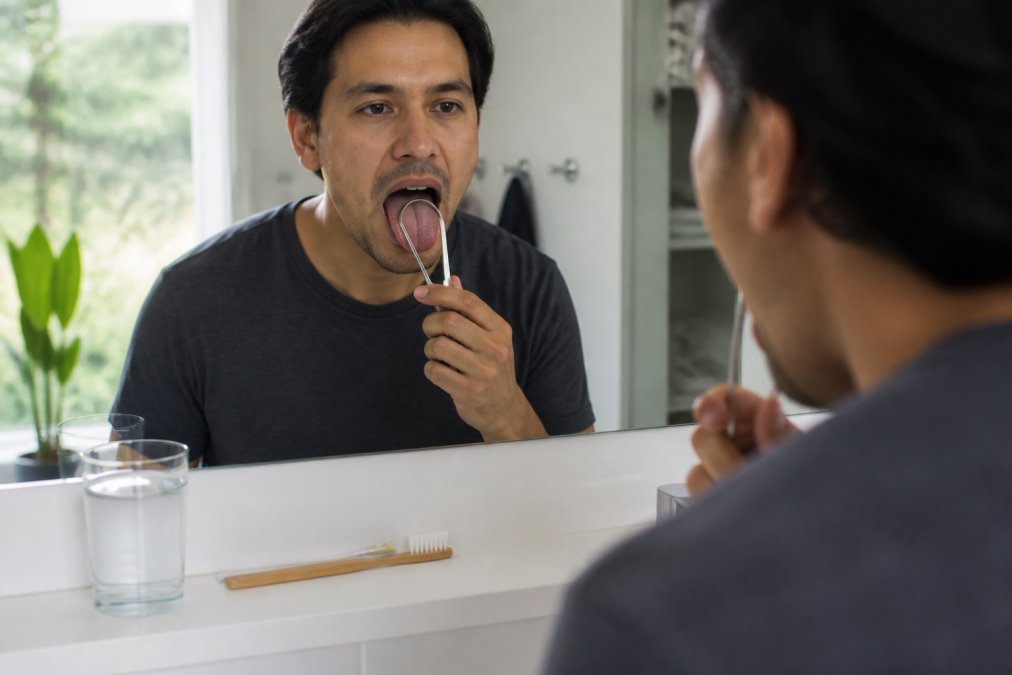
Morning Routine: Tongue Scraping, Brushing, and Hydration
The morning routine addresses overnight bacterial accumulation. During sleep, saliva production drops significantly, creating ideal conditions for anaerobic bacterial growth.
Step 1, Tongue scraping before brushing. Use a dedicated tongue scraper rather than a toothbrush bristle. Work from the back of the tongue forward with firm, even strokes. Three to four passes removes the bulk of tongue coating and embedded bacteria.
Step 2, Brush with a soft-bristled brush for two full minutes. Angle the brush at 45 degrees toward the gum line to disrupt plaque at the margin. Cover all surfaces: outer, inner, and chewing.
Step 3, Drink a full glass of water before anything else. Hydration restarts saliva production and flushes residual bacterial metabolites.
Step 4, Avoid eating immediately after brushing. Give the oral environment time to stabilize before introducing new food particles.
| Step | Action | Why It Matters |
|---|---|---|
| 1 | Tongue scraping | Removes tongue coating and sulfur-producing bacteria |
| 2 | Brush 2 min (soft-bristled) | Disrupts plaque at gum line |
| 3 | Full glass of water | Restarts saliva production |
| 4 | Wait before eating | Allows oral environment to stabilize |
| 5 (Evening) | Floss all contacts | Removes food particles from interdental spaces |
| 6 (Evening) | Antiseptic rinse | Reduces residual bacterial load |
| 7 (Evening) | Clean oral appliances | Prevents biofilm recolonization overnight |
Evening Routine: Flossing, Antiseptic Rinse, and Dental Appliance Care
The evening routine is arguably more important than the morning one. You are preparing your mouth for six to eight hours without saliva flow.
Step 1, Floss every contact point. Curve the floss into a C-shape around each tooth and slide gently beneath the gum line rather than snapping it down.
Step 2, Brush again with the same technique as the morning. Do not skip tongue scraping; bacterial load rebuilds throughout the day.
Step 3, Antiseptic mouthwash rinse. Choose a product with chlorhexidine, cetylpyridinium chloride, or zinc compounds, which have documented efficacy against volatile sulfur compound-producing bacteria. Avoid alcohol-based rinses, which dry the oral mucosa and can worsen xerostomia.
Step 4, Clean dental appliances thoroughly. Dentures, retainers, night guards, and aligners harbor biofilm. Soaking in an appropriate cleaning solution nightly prevents them from reintroducing bacterial load.
Natural Remedies for Gum Health That Also Fight Bad Breath
Natural remedies work best as complements to a structured hygiene routine, not replacements. The most evidence-supported options either reduce bacterial load, support the oral mucosal barrier, or address dry mouth.
Oil pulling with coconut or sesame oil involves swishing a tablespoon of oil for 10 to 15 minutes before brushing. Some practitioners find it reduces plaque and oral dryness, though it should not substitute for conventional hygiene steps.
Zinc-containing products are among the better-studied natural interventions for volatile sulfur compounds. Zinc ions bind to sulfur compounds and inhibit their formation.
Green tea contains catechins with antimicrobial properties. Unsweetened green tea consumed regularly may help reduce bacterial populations without the drying effects of alcohol-based rinses.
Dietary Triggers to Eliminate and Foods That Help
Diet has a direct and often underestimated effect on chronic bad breath.
Eliminate or reduce:
- Garlic and onions (contain sulfur compounds that persist in the bloodstream)
- High-sugar foods and refined carbohydrates (feed acid-producing bacteria)
- Alcohol (promotes dry mouth and disrupts the oral microbiome)
- Excess dairy (provides protein substrates that bacteria metabolize into sulfur compounds)
Foods that support fresher breath:
- Fibrous vegetables such as celery and carrots (stimulate saliva and clean tooth surfaces)
- Parsley and fresh herbs (contain chlorophyll compounds with deodorizing properties)
- Plain water and herbal teas (maintain hydration and saliva production)
- Probiotic-rich foods such as plain yogurt (support a balanced oral and gut microbiome)
Oral Microbiome Balance: The Missing Piece in Most Breath Treatments
Most breath treatments target bacteria with the goal of eliminating them. The more accurate goal is rebalancing the oral microbiome, reducing populations of anaerobic, sulfur-producing species while supporting beneficial bacteria that keep them in check.
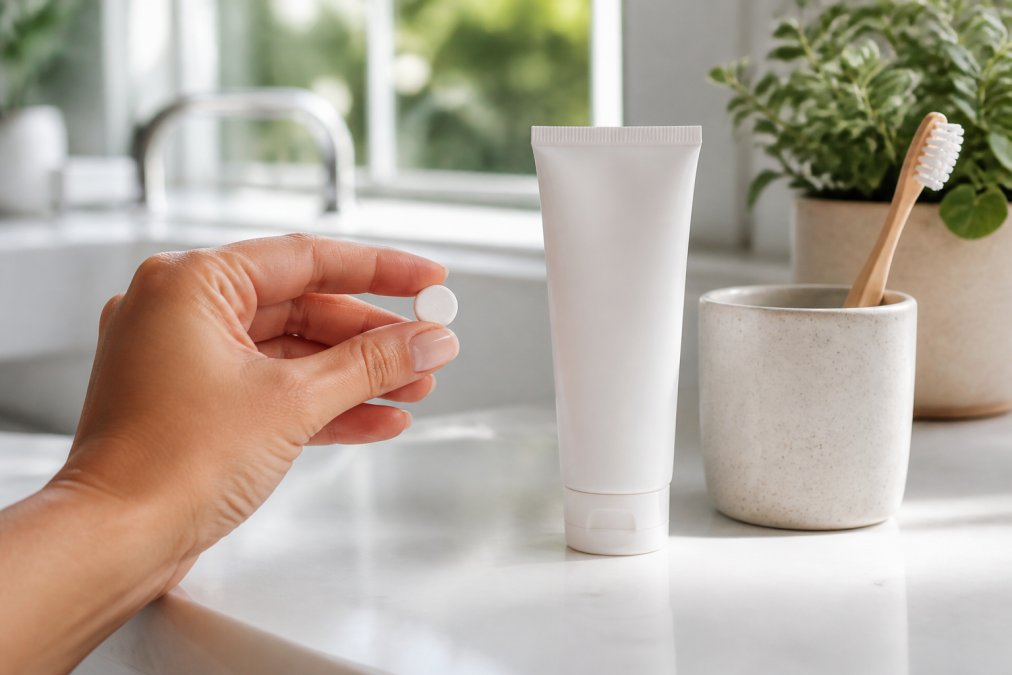
The oral microbiome is a complex ecosystem of several hundred bacterial species. Aggressive antiseptic use, particularly alcohol-based rinses used daily, disrupts this ecosystem indiscriminately. The result is temporary reduction in bacterial load followed by rapid recolonization by the same anaerobic species that caused the problem.
A microbiome-friendly approach focuses on reducing pathogenic species without wholesale disruption of beneficial flora. Ingredients such as proteolytic enzymes break down the protein substrates that anaerobic bacteria feed on, removing the food source rather than killing bacteria directly.
This is the science behind PROTEITH®'s proteolytic technology. The formulation is designed to work with the oral microbiome rather than against it, using natural, microbiome-friendly ingredients to reduce bacterial inputs that drive volatile sulfur compound production. It is clinically validated and free from harsh abrasives and artificial additives.
As noted in the NIH's overview of oral microbiome research, the balance between health-associated and disease-associated bacterial communities in the mouth has significant implications beyond local oral health. Supporting that balance, rather than disrupting it repeatedly, is a more sustainable long-term strategy.
The Psychological Impact of Chronic Halitosis and Why Treatment Matters
Chronic bad breath is not just a clinical problem. For many people, it is a source of genuine social anxiety that shapes how they interact and how they feel about themselves in professional and personal settings.
A common pattern: people with chronic halitosis begin to preemptively avoid close conversation. They cover their mouth when speaking, decline social invitations, or avoid intimacy. Over time, this behavioral withdrawal can contribute to isolation and reduced self-confidence that outlasts even successful treatment.
The psychological impact is underreported because the condition carries social stigma that discourages people from discussing it openly, even with their dentist. Many patients live with it for years before seeking help.
This matters for treatment because anxiety and stress themselves affect saliva production. Stress-related xerostomia is a real phenomenon; the nervous system activation that produces a dry mouth before a presentation also reduces salivary flow during periods of chronic anxiety. For people whose halitosis is already partly driven by dry mouth, the psychological burden can physiologically worsen it.
When to See a Dentist and What Professional Care Covers
Self-managed oral hygiene handles most cases of chronic bad breath when applied consistently. There are clear signals that professional care is necessary.
See a dentist if:
- Bad breath persists despite two weeks of consistent morning and evening routine
- You notice bleeding gums when brushing or flossing
- You have visible tartar buildup that brushing does not remove
- You experience tooth sensitivity, pain, or visible decay
- You have been diagnosed with or suspect periodontal disease
- Dry mouth is severe, persistent, or linked to medication
A dental checkup for chronic halitosis typically includes professional cleaning to remove tartar and disrupt subgingival plaque, periodontal probing to assess gum pocket depth, and evaluation for tooth decay or failing restorations. If periodontal disease is identified, a deeper cleaning procedure may be recommended.
For cases where oral causes have been ruled out, a referral to a physician is appropriate. Persistent halitosis with no oral source warrants evaluation for sinus infection, post-nasal drip, gastroesophageal reflux, or metabolic conditions. As outlined by the Cleveland Clinic's guide to halitosis causes and treatment, systemic causes account for a meaningful minority of chronic cases and require medical rather than dental management.
Preventative care appointments every six months are the most reliable way to catch periodontal disease and tooth decay early, before they become established reservoirs of halitosis-causing bacteria.
Chronic bad breath is a solvable problem, but it requires addressing the actual source rather than layering on temporary fixes. The combination of a structured daily routine, microbiome-aware product choices, dietary adjustments, and timely professional care gives most people sustainable results. PROTEITH® is built for exactly this challenge: its clinically validated, proteolytic formula supports a healthier oral microbiome without harsh abrasives or artificial additives, making it a practical foundation for anyone ready to move beyond products that only mask the problem. Shop Now and start building a routine that works from the inside out.
Frequently Asked Questions
What are the primary medical causes of chronic halitosis?
Chronic bad breath most often stems from bacteria buildup on the tongue, dental plaque, and food particles trapped between teeth. Periodontal disease and gingivitis are common culprits. Beyond the mouth, xerostomia (dry mouth) reduces saliva production, letting odor-causing bacteria thrive. Systemic conditions such as sinus infections, post-nasal drip, acid reflux, and certain metabolic disorders can also produce volatile sulfur compounds that make breath smell persistently bad. A dentist can help identify whether the source is oral or systemic.
When should I see a dentist for persistent bad breath?
See a dentist if bad breath persists despite consistent brushing, flossing, tongue cleaning, and staying hydrated. Chronic halitosis that does not respond to standard oral hygiene within two to four weeks often signals an underlying issue such as periodontal disease, tooth decay, or a systemic condition. A professional cleaning can remove tartar that home care cannot reach, and a dental checkup can rule out or address deeper causes before they worsen.
Can dietary supplements help improve oral microbiome health?
Certain supplements support oral microbiome balance by encouraging beneficial bacteria and reducing the strains that produce sulfur compounds. Proteolytic enzymes, for example, break down the protein residues that odor-causing bacteria feed on. Products formulated to work both in the mouth and systemically, like PROTEITH®, which is clinically validated and doubles as a dietary supplement, offer a dual approach that standard toothpastes cannot. Always check that any supplement is free from harsh chemicals and suitable for your health needs.
Are there natural ways to balance the oral microbiome for fresher breath?
Yes. Staying well hydrated supports saliva production, which naturally washes away bacteria. Tongue scraping removes the coating where most odor-causing bacteria live. Avoiding high-sugar and acidic foods reduces bacterial fuel. Using microbiome-friendly oral care products, those free from harsh antibacterial agents that kill beneficial bacteria alongside harmful ones, helps maintain a healthier bacterial balance. Consistent flossing and regular dental checkups round out a natural, preventative care approach to long-term oral health wellness.

