

Is Fluoride-Free Toothpaste Effective? A 2026 Guide
Table of Contents
- What Fluoride-Free Toothpaste Actually Does
- Hydroxyapatite: The Science-Backed Alternative to Fluoride
- How to Prevent Cavities Without Fluoride
- Natural Toothpaste for Sensitivity: What to Look For
- Microbiome-Friendly Oral Care and the Oral Microbiome
- Is Fluoride-Free Toothpaste Safe? Pros, Cons, and Who It Suits
- Frequently Asked Questions
Last Updated: September 16, 2026
What Fluoride-Free Toothpaste Actually Does
Fluoride-free toothpaste cleans teeth and supports oral hygiene without fluoride, relying instead on ingredients that remove plaque, neutralize acids, and support the mouth's natural repair processes. At PROTEITH®, we built our entire oral care line around this approach.

The question "is fluoride free toothpaste effective" has a more nuanced answer than most headlines suggest. Effectiveness depends on what you're trying to achieve: stain removal, gum comfort, breath freshness, or cavity prevention in a high-risk mouth. Those are different jobs, and they call for different ingredients.
Demineralization and Remineralization Explained
Demineralization is the process where acids strip minerals like calcium and phosphate from tooth enamel. Remineralization is the reverse: minerals from saliva and toothpaste get redeposited into enamel, repairing early damage.
Every time you eat or drink something acidic, your mouth swings toward demineralization. Saliva usually brings it back. The trouble starts when acid exposure outpaces recovery, and that's when early decay, dental erosion, and sensitivity take hold.
Fluoride speeds remineralization by forming a harder mineral layer. Fluoride-free formulas take a different route, using ingredients like hydroxyapatite, xylitol, and calcium compounds to support the same repair process.
Hydroxyapatite: The Science-Backed Alternative to Fluoride
Hydroxyapatite is a calcium phosphate mineral that makes up roughly the same material as your tooth enamel and dentin. When used in toothpaste, it deposits onto the tooth surface to support enamel remineralization and form a protective barrier against acid damage.
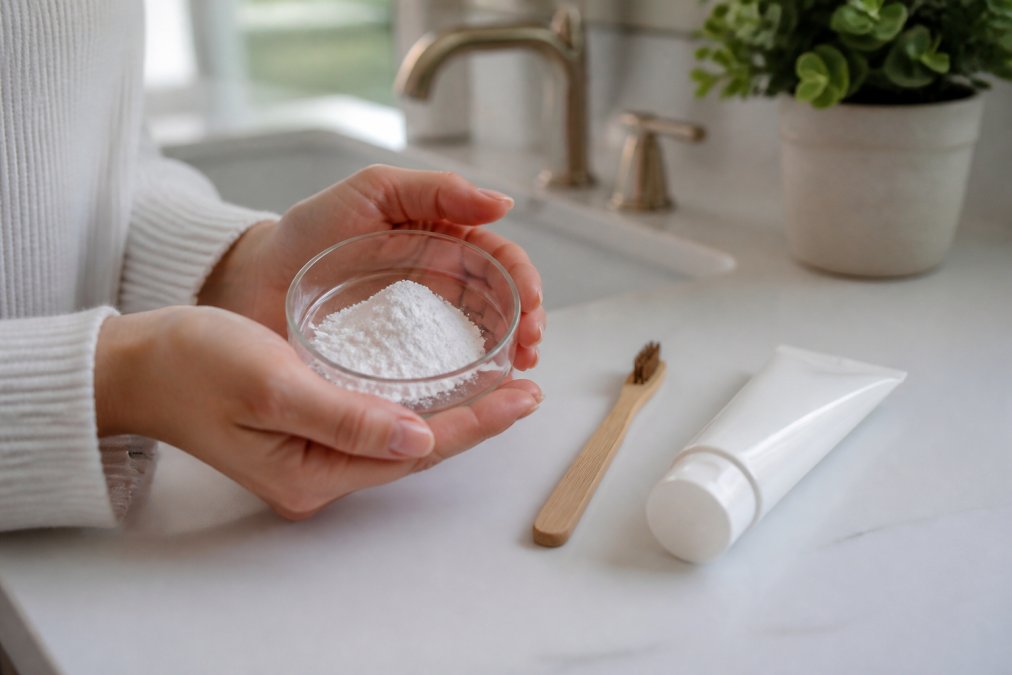
What makes hydroxyapatite interesting is that it works without the fluoride toxicity concerns that worry some parents and adults. American Dental Association guidance on fluoride and oral health acknowledges multiple remineralizing agents, and hydroxyapatite has become the leading fluoride-free option in clinical research on enamel repair.
How to Prevent Cavities Without Fluoride
Cavity prevention without fluoride comes down to reducing acid exposure, supporting enamel remineralization, and disrupting bacterial buildup. No single ingredient does all three, so the strategy is cumulative, and the right mix depends heavily on who is using it.
A practical framework for lower cavity risk:
- Cut acid frequency: fewer snacks and sipped sodas mean fewer demineralization cycles
- Support remineralization: use hydroxyapatite, xylitol, or calcium-based formulas
- Disrupt plaque: brush twice daily and clean between teeth
- Support saliva: stay hydrated and chew xylitol gum after meals
- Keep dental checkups: early demineralization is reversible; cavities are not
Matching the Strategy to the Person
Most guides stop at the bullet list above. The harder question is who is actually brushing. A fluoride-free routine that works well for one mouth can be a poor fit for another.
Children under six. The main reason parents reach for fluoride-free paste is fluorosis risk from swallowing. That risk is real, but so is early childhood caries. For a child with no existing decay, a hydroxyapatite formula plus supervised brushing and a no-juice-between-meals rule is a defensible routine. For a child who already has white-spot lesions or a sibling with active decay, the calculus shifts, that is a conversation to have with a pediatric dentist rather than a decision to make from a label.
Adults with a high cavity history. A history of restorations, recent decay, dry mouth from medication, or a diagnosis of xerostomia puts you in a different risk tier. Saliva is the body's built-in remineralization system, and when it drops, so does the mouth's ability to recover from acid attacks. In that situation, hydroxyapatite paste can help, but it is doing more work than it would in a well-hydrated mouth. Many practitioners pair it with prescription-strength fluoride or a high-concentration hydroxyapatite product rather than treating fluoride-free as an all-or-nothing switch.
Adults with gum concerns but low decay risk. This is the group fluoride-free formulas serve best. If your dentist consistently finds no new cavities but your gums bleed, the problem is inflammation, not demineralization, and the ingredients that matter are the ones that calm tissue and disrupt plaque biofilm, not the ones that harden enamel.
People with sensitivities or allergies. Some users react to flavorings, foaming agents like sodium lauryl sulfate, or preservatives in conventional paste. A short ingredient panel is easier to audit. Read the full list, not the front of the tube.
Xylitol and Other Ingredients That Support Enamel
Xylitol is a sugar alcohol that cavity-causing bacteria cannot ferment (pubmed.ncbi.nlm.nih.gov). Regular xylitol exposure reduces bacterial buildup and shifts the oral microbiome toward less acid-producing species. Dose matters: the research literature generally points to multiple exposures per day rather than a single brushing, which is why xylitol gum between meals shows up in so many prevention protocols.
PROTEITH® Oral Hygiene System for →
Calcium carbonate and calcium phosphate supply the raw minerals for remineralization. Look for these alongside hydroxyapatite rather than as a substitute for it. Avoid high-abrasivity formulas if you have exposed dentin or dental erosion, since abrasives can wear away the very enamel you're trying to protect. Relative dentin abrasivity (RDA) is the standard measure, a lower RDA is gentler, and if a brand does not publish one, that is itself information.
What Actually Cleans Teeth in a Fluoride-Free Formula
Strip away the marketing and a fluoride-free paste has to do four jobs: remove plaque mechanically, lift surface stains, neutralize acid, and support remineralization. The ingredients that do the work are unglamorous.
- Abrasives, silica, calcium carbonate, and baking soda physically scrub plaque and stain. They are the workhorses, and their particle size and shape determine how aggressive they are.
- Surfactants, sodium lauryl sulfate is the classic foaming agent; many fluoride-free brands swap in gentler alternatives like sodium cocoyl glutamate for users who get mouth ulcers from SLS.
- Humectants, glycerin and sorbitol keep the paste from drying out and give it mouthfeel. They do not clean anything.
- Actives, hydroxyapatite, xylitol, calcium phosphate, and enzymes are the ingredients with a mechanism behind them.
- Flavor and color, marketing, not function.
If a fluoride-free paste lists only humectants, flavor, and a mild abrasive, it is essentially a flavored scrub.
Natural Toothpaste for Sensitivity: What to Look For
Natural toothpaste for sensitivity should block nerve signals from exposed dentin and reduce the acid that triggers sensitivity in the first place. Two mechanisms matter here.
Microbiome-Friendly Oral Care and the Oral Microbiome
Fluoride-free toothpastes that lean on proteolytic enzymes, xylitol, and plant-based ingredients tend to be gentler on this ecosystem. That's the theory behind PROTEITH®'s proteolytic technology, which targets the bacteria that contribute to tartar.
Is Fluoride-Free Toothpaste Safe? Pros, Cons, and Who It Suits
Fluoride-free toothpaste is safe for daily use in most adults and children. The bigger question is whether it is the right choice for your specific cavity risk, and that answer changes depending on who is holding the brush.
Factor |
Fluoride Toothpaste |
Fluoride-Free Toothpaste |
|---|---|---|
Remineralization |
Fast, well-documented |
Depends on ingredients like hydroxyapatite |
Cavity prevention |
Strong evidence base |
Good if formula is well-designed |
Fluorosis risk |
Possible if swallowed |
None |
Gum support |
Varies by formula |
Often gentler, microbiome-friendly |
Allergy and sensitivity profile |
SLS, artificial flavorings common |
Shorter panels, easier to audit |
Best for |
High cavity risk, kids who don't swallow |
Sensitivity, gum concerns, fluoride avoidance |
Pros of fluoride-free toothpaste:
- No fluorosis risk for young children who swallow paste
- Often gentler on gum tissue and the oral microbiome
- Compatible with hydroxyapatite and xylitol for enamel support
- Shorter ingredient lists, which matters for people with allergies or sensitivities
Cons of fluoride-free toothpaste:
- Weaker evidence base for cavity prevention in high-risk mouths
- Quality varies widely between brands, some are essentially flavored scrub
- Not a substitute for professional dental care in active decay
Who Should Not Switch
This is the part most articles skip. Fluoride-free is not a universal upgrade, and there are situations where switching is the wrong call.
- Active decay or a cavity found at your last visit. Treat the cavity first. A remineralizing paste supports enamel; it does not fill a hole.
- Dry mouth from medication, radiation, or autoimmune conditions. Reduced saliva means reduced natural repair. Talk to your dentist before dropping fluoride.
- Orthodontic patients. Brackets and aligners create plaque traps that raise cavity risk for the duration of treatment.
- Children with existing white-spot lesions or a sibling with active decay. Risk clusters in families, and a pediatric dentist should weigh in.
Fluoride Sensitivity vs. Fluoride Avoidance
These get lumped together, but they are different problems with different answers.
Fluoride-free toothpaste can support oral health maintenance when the formula includes hydroxyapatite, xylitol, or calcium compounds. It is not automatically better or worse than fluoride, it is a different tool for a different set of priorities, and the right choice depends on your cavity risk, your saliva, and what your dentist is actually seeing.
Frequently Asked Questions
Do dentists recommend toothpaste without fluoride?
Recommendations vary. Many dentists still recommend fluoride toothpaste for cavity prevention, but a growing number acknowledge fluoride-free options that contain hydroxyapatite or xylitol. The American Dental Association (ADA) currently awards its Seal of Acceptance primarily to fluoride toothpastes, though some hydroxyapatite products have received it. Your dentist can advise based on your cavity risk, sensitivity, and overall oral health. If you choose fluoride-free toothpaste, regular dental checkups become even more important for monitoring enamel health.
Can fluoride-free toothpaste prevent cavities?
Fluoride-free toothpaste can support cavity prevention through ingredients like hydroxyapatite, xylitol, and calcium carbonate, which help remineralize enamel and reduce bacterial buildup. However, the evidence base for fluoride remains stronger for cavity reduction. The key is consistency: brushing twice daily, flossing, and limiting sugary and acidic foods matter as much as the toothpaste you choose.
What ingredients should I look for in fluoride-free toothpaste?
Look for hydroxyapatite, which rebuilds enamel; xylitol, which reduces cavity-causing bacteria; and calcium carbonate for gentle cleaning. Avoid harsh abrasives that can damage enamel over time. Microbiome-friendly options avoid antibacterial agents that wipe out beneficial oral bacteria. PROTEITH® Oral Hygiene System for Healthy Gums ($14.00) combines xylitol with a fluoride-free, all-natural toothpowder formula designed to support gum health and reduce bleeding.
Is fluoride-free toothpaste safe for children?
However, children still need cavity protection. Talk to your pediatric dentist about whether a fluoride-free option with hydroxyapatite or xylitol is appropriate for your child's age and cavity risk. Supervised brushing and using a pea-sized amount remain important regardless of which toothpaste you choose.

