

Animal Essentials Alternative for Dogs: A 2026 Guide
Table of Contents
- Why Look for an Animal Essentials Alternative for Dogs?
- What to Look for in Natural Dog Dental Care Products
- How to Remove Tartar from Dog Teeth Without Vet Cleanings
- Comparing Delivery Methods: Powders vs. Chews vs. Supplements
- Key Ingredients and Their Functions in Canine Supplements
- Safety First: Ingredient-Specific Contraindications and Transitioning
- Conclusion: Choosing the Right Animal Essentials Alternative
- Frequently Asked Questions
Last Updated: September 8, 2026
Why Look for an Animal Essentials Alternative for Dogs?
Most pet owners discover Animal Essentials when their dog’s breath turns foul or tartar begins creeping up the gum line. The brand has served the holistic pet community for years, but many owners now seek an animal essentials alternative for dogs that offers more complete nutritional support alongside oral care such as JR & Felix amino 360 offered by PROTEITH Solutions. Most products address either dental health or systemic wellness, rarely both.
The shift toward whole-plant formulas reflects a broader trend in holistic pet wellness. Owners want preventative care that supports digestive function, immune system support, and skin and coat health in one product. A single-target supplement often leaves other foundational systems under-supported, which is why comparing formulations matters more than brand loyalty.
What to Look for in Natural Dog Dental Care Products
Natural dog dental care products vary widely in quality and mechanism. The most effective options combine mechanical action with systemic support. Here’s what separates worthwhile formulations from marketing-heavy powders:
- Bioavailable ingredients that absorb through the gastrointestinal tract rather than merely coating teeth
- Whole-plant or whole-food bases that provide nutrient-dense cofactors for better use
- Veterinary-formulated ratios rather than kitchen-sink blends of every trendy herb
- Transparent sourcing with therapeutic grade ingredients and clear labeling
- Multi-system benefits such as joint comfort, cognitive health, and metabolic support alongside oral benefits
The best natural dog dental care products also avoid harsh abrasives that damage enamel over time. Look for formulations emphasizing herbal synergy, where ingredients like spirulina and nettle leaf work together rather than in isolation.
How to Remove Tartar from Dog Teeth Without Vet Cleanings
Removing established tartar at home requires a disciplined, multi-layered approach. While professional cleanings remain the gold standard for advanced periodontal disease, daily intervention can slow accumulation and, in some cases, soften existing deposits. The process involves three distinct layers: mechanical disruption, enzymatic breakdown, and systemic nutritional support. Here is a step-by-step transition guide.
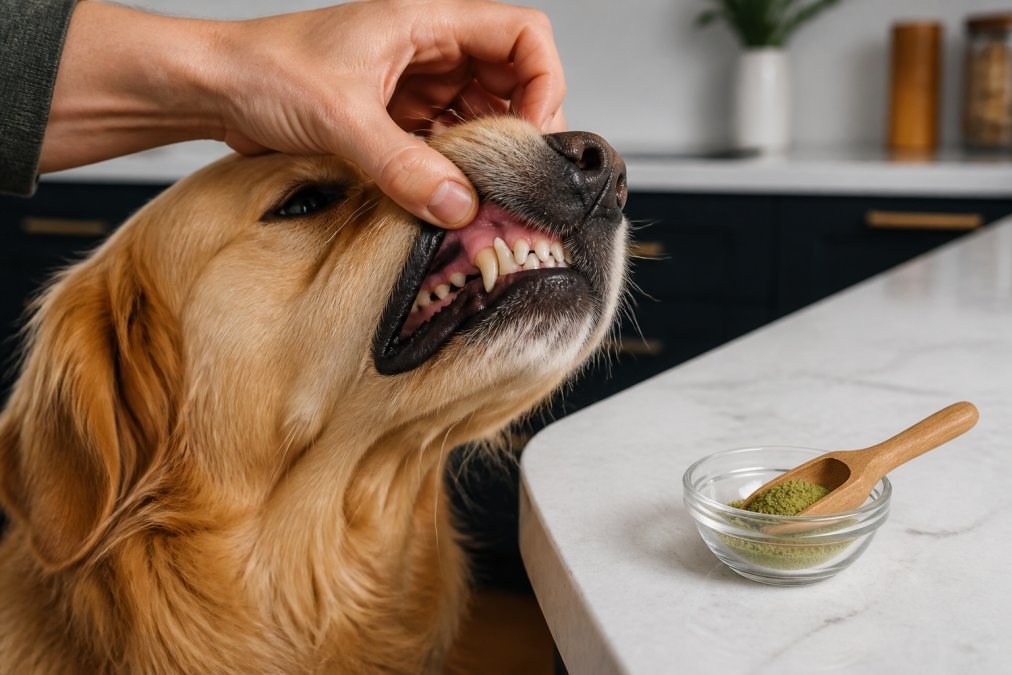
Phase 1: Mechanical Disruption (Days 1-14)
Start by brushing with a soft-bristled finger brush or using dental wipes daily, ideally after the evening meal. This addresses surface plaque before it mineralizes into tartar. Use a pea-sized amount of enzymatic toothpaste, never human toothpaste, as xylitol is toxic to dogs (the FDA). For dogs resistant to brushing, focus on dental wipes soaked in chlorhexidine or on textured chews that provide abrasive action. The goal in this phase is to build a routine without triggering a fight.
Phase 2: Enzymatic Breakdown (Days 15-28)
Once your dog tolerates the mechanical step, introduce enzyme-based products that break down the protein matrix holding plaque together. Proteolytic enzymes for dogs, such as papain from papaya and bromelain from pineapple, digest the organic biofilm that binds plaque to tooth surfaces (peer-reviewed research). Apply enzyme gels directly to the gum line, or use a supplement that delivers these enzymes systemically. This dual action is critical: topical enzymes work on the surface, while systemic enzymes support the dog’s natural inflammatory response and detoxification pathways.
Phase 3: Systemic Nutritional Support (Week 5 and Beyond)
Add a whole-plant supplement that supports oral health from the inside. This matters more than most owners realize. Tartar is a biofilm problem, and systemic support helps reduce the bacteria that contribute to tartar while supporting the immune response in the mouth. Look for formulas containing spirulina, which may help reduce plaque, and nettle leaf for its mineral density that supports gum tissue integrity.
The Veterinary-Backed Transition Schedule
A common pattern in canine nutrition is a two-week transition to avoid gastrointestinal upset. Here is a recommended schedule:
- Week 1: Administer a quarter dose of the new supplement mixed into a small amount of wet food once daily. Monitor stool consistency and appetite.
- Week 2: Increase to half the recommended dose. Watch for loose stools, gas, or reduced food interest, these are signs to hold at the current dose for another week.
- Week 3: Move to the full dose only if your dog has shown no digestive changes. Continue monitoring energy levels and coat condition.
What to Expect: Realistic Timelines
Visible tartar softening may take 4 to 6 weeks of consistent mechanical plus enzymatic intervention. Established tartar that has hardened beyond the gum line will not fully resolve at home; however, you can slow its progression and reduce the frequency of professional cleanings. If you notice bleeding gums, persistent bad breath, or difficulty eating, these are signs of periodontal disease that require veterinary attention, not another home remedy.
Comparing Delivery Methods: Powders vs. Chews vs. Supplements
Delivery method determines compliance and absorption. Here’s how the three main formats compare for canine oral health:
Delivery Method |
Best For |
Absorption |
Compliance |
Key Drawback |
|---|---|---|---|---|
Powder |
Mixing into food |
Fastest, high bioavailability |
Easy for most dogs |
Requires daily measuring |
Chews |
Treat-motivated dogs |
Moderate, slower release |
High enthusiasm |
Often contains fillers |
Capsules |
Precise dosing |
Consistent |
Difficult for picky eaters |
Requires hiding in food |
Powders generally offer superior bioavailability because they mix thoroughly with food and begin absorption immediately. Chews add convenience but often include binding agents that dilute active ingredients. For dogs with digestive sensitivities, powders in whole-plant formulas tend to cause fewer gastrointestinal issues than concentrated chews.
Key Ingredients and Their Functions in Canine Supplements
Understanding ingredient roles helps you evaluate any animal essentials alternative for dogs with confidence. Several botanicals appear consistently in high-quality canine supplements, each serving a distinct purpose. But beyond the benefits, responsible owners need to know which ingredients to avoid for specific pre-existing conditions.
The Core Botanicals and Their Mechanisms
- Spirulina supports immune system function and provides antioxidant properties that combat oxidative stress from free radicals. It is a blue-green algae rich in phycocyanin, a pigment with potent free-radical scavenging activity. In canine nutrition, spirulina is often used to support healthy inflammatory responses and to help maintain energy in senior dogs.
- Nettle leaf acts as a nutrient-dense base rich in vitamins A, C, and K, plus minerals like calcium and magnesium. It supports metabolic function and overall vitality, and it is valued for its role in supporting healthy joint tissue in aging dogs.
- Burdock root promotes detoxification and supports liver function through its gentle cleansing action. It contains inulin, a prebiotic fiber that feeds beneficial gut bacteria, which is why it appears in formulas targeting digestive health.
- Flaxseed delivers omega-3 fatty acids (alpha-linolenic acid) for skin and coat health plus anti-inflammatory benefits. It also provides lignans, which have antioxidant properties.
- Pumpkin seed supports digestive function and provides zinc for immune and skin health. It is also a natural source of cucurbitacin, an amino acid compound that may support urinary tract health in dogs.
Herbal Synergy vs. Isolated Extracts
The concept of herbal synergy explains why whole-plant formulas outperform isolated extracts. When these botanicals appear together, their combined antioxidant properties and nutritional profiles support multiple systems simultaneously. For example, spirulina’s immune support pairs with burdock root’s detoxification action to support the overall toxic load on the liver, which in turn supports oral health by reducing systemic inflammation.
Ingredient-Specific Contraindications: What to Avoid
Not every supplement suits every dog. Here is a practical guide on which herbs to avoid for pets with specific pre-existing conditions:
- Kidney disease: Avoid high-protein botanical concentrates, including spirulina and nettle leaf in large doses. These increase the renal workload. Instead, look for formulas with lower protein content and higher fiber, such as pumpkin seed alone.
- Thyroid conditions: Spirulina and other sea vegetables contain iodine, which can interfere with thyroid medication absorption and hormone synthesis (PubMed). If your dog is on levothyroxine, separate supplement administration by at least 4 hours from medication, or choose a formula without spirulina.
- Liver disease: While burdock root is often touted for liver support, it can be too stimulating for dogs with active liver inflammation. Opt for milk thistle-based formulas instead, which have a more targeted hepatoprotective mechanism.
- Pregnant or nursing dogs: Avoid detoxifying herbs like burdock root, as they can stimulate uterine contractions. Stick to gentle, nutrient-only formulas and always consult your veterinarian first.
Delivery Method and Bioavailability: A Comparative Analysis
Delivery method determines how well these ingredients are absorbed. Here is a comparison that goes beyond the basic powder-versus-chew debate:
Delivery Method |
Bioavailability |
Onset of Action |
Best For |
Key Drawback |
|---|---|---|---|---|
Powder |
Highest, mixes with food and begins absorption in the stomach |
30-60 minutes |
Dogs with digestive sensitivities |
Requires daily measuring |
Tincture (liquid extract) |
High, sublingual absorption bypasses first-pass liver metabolism |
15-30 minutes |
Dogs who refuse food additives |
Alcohol base can be off-putting |
Chew |
Moderate, slower release due to binding agents |
1-2 hours |
Treat-motivated dogs |
Often contains fillers that dilute active ingredients |
Capsule |
Consistent, but requires gastric dissolution |
45-90 minutes |
Precise dosing |
Difficult for picky eaters |
Powders generally offer superior bioavailability because they mix thoroughly with food and begin absorption immediately. Tinctures offer the fastest onset but are less common in canine oral health products. Chews add convenience but often include binding agents like cellulose or glycerin that dilute active ingredients. For dogs with digestive sensitivities, powders in whole-plant formulas tend to cause fewer gastrointestinal issues than concentrated chews.
For dogs needing complete amino acid support alongside oral care, JR & Felix Amino 360 provides the 20 essential amino acids dogs need for balanced cell health while helping prevent tartar build-up and eliminating bad breath.

Safety First: Ingredient-Specific Contraindications and Transitioning
Not every supplement suits every dog. Ingredient-specific contraindications matter, and responsible owners should review them before starting any regimen. Dogs with kidney disease should avoid high-protein botanical concentrates. Those on thyroid medication may need adjusted dosing with spirulina, which can influence iodine uptake. Pregnant or nursing dogs warrant veterinary consultation before introducing any new supplement.
Transitioning to a new supplement requires patience. A transition guide typically spans two weeks: week one introduces the supplement at a quarter dose, week two increases to half, and the full dose begins only after your dog tolerates the increase without digestive changes. Monitor stool consistency, energy levels, and coat condition throughout this period.
Conclusion: Choosing the Right Animal Essentials Alternative
The right animal essentials alternative for dogs balances oral health support with systemic wellness, delivered in a form your dog will actually accept. Powders offer the best bioavailability, whole-plant formulas provide the broadest nutritional support, and proteolytic enzymes address the biofilm problem at its source.
For dogs needing comprehensive amino acid support that also targets oral health, PROTEITH®’s JR & Felix Amino 360 delivers preventative oral care alongside nutrients for healthier skin and coat. It prevents tartar build-up, eliminates bad breath, and supports balanced cell health through all 20 essential amino acids dogs require. Get started with JR & Felix Amino 360 and give your dog whole-body support that starts in the mouth.
Frequently Asked Questions
What is the best all-in-one alternative to Animal Essentials for my dog?
The best alternative depends on your dog's specific needs. For a focus on dental health and tartar, look for products with proteolytic enzymes. JR & Felix Amino 360 is a strong option because it provides all 20 essential amino acids to support cell health while also targeting tartar buildup and bad breath. For broader wellness, compare the ingredient list against your dog's diet to avoid overlaps.
How do proteolytic supplements compare to traditional herbal powders for dogs?
Traditional herbal powders often support general wellness or specific organs like the liver. Proteolytic supplements, however, work differently: they help break down proteins, which is key for reducing the bacteria and biofilm that cause tartar on teeth. This makes them more targeted for dental health. Many natural dog dental care products now combine proteolytic enzymes with other supplements for a holistic approach.
Can dietary supplements really help with dog tartar removal?
Yes, they can help prevent and reduce tartar, but they are not a substitute for a professional dental cleaning if your dog has advanced buildup. Supplements with proteolytic enzymes work by breaking down the protein matrix that holds plaque and tartar to the teeth. Used daily, they may help keep plaque from mineralizing into tartar, freshen breath, and support healthier gums between vet visits.
What should I look for when choosing a natural supplement for my dog's dental health?
Look for a supplement that is veterinary-formulated and lists specific active ingredients like proteolytic enzymes, spirulina, or flaxseed. Check that it is free from artificial additives and fillers. Consider the delivery method: powders are easy to mix into food, while chews are convenient. Always introduce new supplements gradually and consult your vet, especially if your dog has existing health conditions.

