

How to Choose the Right Alcohol-Free Mouthwash: A Practical Guide
Quick Summary
To choose the right alcohol-free mouthwash, first name your main oral-health goal, such as dry mouth, bad breath, cavity prevention or gum care. Then check the Drug Facts panel for the active ingredient that addresses it, like fluoride, CPC or zinc, and confirm the alcohol-free base feels comfortable for you.
- Check the ingredient list, since some mouthwashes contain ethanol and alcohol-free versions use glycerin, xylitol or sorbitol instead.
- Look at the Drug Facts panel for active ingredients, not the marketing claims on the front of the bottle.
- Fluoride is the ingredient to check for cavity-related purposes, and the concentration matters.
- Give a new rinse two to four weeks of consistent use before judging whether your main symptom improved.
- Mouthwash does not replace brushing and flossing, and persistent symptoms like bleeding gums need a dentist.
Table of Contents
- Alcohol-Based vs. Alcohol-Free Mouthwash: What the Difference Means
- Benefits and Drawbacks of Alcohol-Free Formulas
- Match Your Mouthwash to Your Oral-Health Goal
- Reading Labels: Active Ingredients That Matter
- Alcohol vs. Alcohol-Free Mouthwash for Gingivitis
- Does Alcohol-Free Mouthwash Kill Good Bacteria?
- Choosing a Best Alcohol-Free Antibacterial Mouthwash
- Using Your Mouthwash Correctly and Knowing When to See a Dentist
- Frequently Asked Questions
Alcohol-Based vs. Alcohol-Free Mouthwash: What the Difference Means
Many mouthwashes sold in the United States contain ethanol. Check the ingredient list on the label to see whether a specific product contains alcohol. Alcohol-free versions swap that ethanol for other ingredients, such as glycerin, xylitol or sorbitol, to keep the product liquid and pleasant to use. The difference matters most for people with dry mouth, sensitive gums or irritation.
Alcohol is a solvent and an antiseptic. It can help dissolve flavor oils and gives some rinses a strong, cooling sting. That same sting can feel harsh on tissue that is already inflamed or dry. An alcohol-free rinse removes the burn, but it does not automatically do more or less for your teeth.
Look at the active ingredients on the label, not just the word "alcohol." Rinses with fluoride, cetylpyridinium chloride (CPC) or essential oils may provide benefits with or without alcohol, depending on the formula.
Here is a quick comparison:
| Feature | Alcohol-Based Rinse | Alcohol-Free Rinse |
|---|---|---|
| Typical base | Ethanol plus water | Water plus glycerin, xylitol or sorbitol |
| Feel in the mouth | Strong, burning or tingling | Mild, often gentle |
| Dry mouth risk | Higher for some users | Lower for most users |
| Common actives | Essential oils, CPC, fluoride | Fluoride, CPC, zinc, xylitol |
| Best for | Users who like a strong flavor | Users with sensitivity or dryness |
Benefits and Drawbacks of Alcohol-Free Formulas
Alcohol-free mouthwash may be a more comfortable choice for people who feel stinging or dryness after rinsing. It is also a common pick for children and for anyone who wants to avoid alcohol in their daily routine.
Benefits:
- Less burning on sore or sensitive tissue
- Often gentler on the mouth
- Usually milder in taste and feel
- Good option for daily use
Drawbacks:
- Some formulas taste weaker or less intense
- Can cost more than basic alcohol-based rinses
- Not every alcohol-free product has the same active ingredients
A common mistake is assuming alcohol-free always means better. The real test is whether the rinse contains the ingredient that fits your goal, such as fluoride for cavities or CPC for plaque.
Match Your Mouthwash to Your Oral-Health Goal
Start with the problem you want to solve, then work backward to the active ingredient that addresses it. A rinse that suits one goal may do little for another, and many people have more than one goal at once.
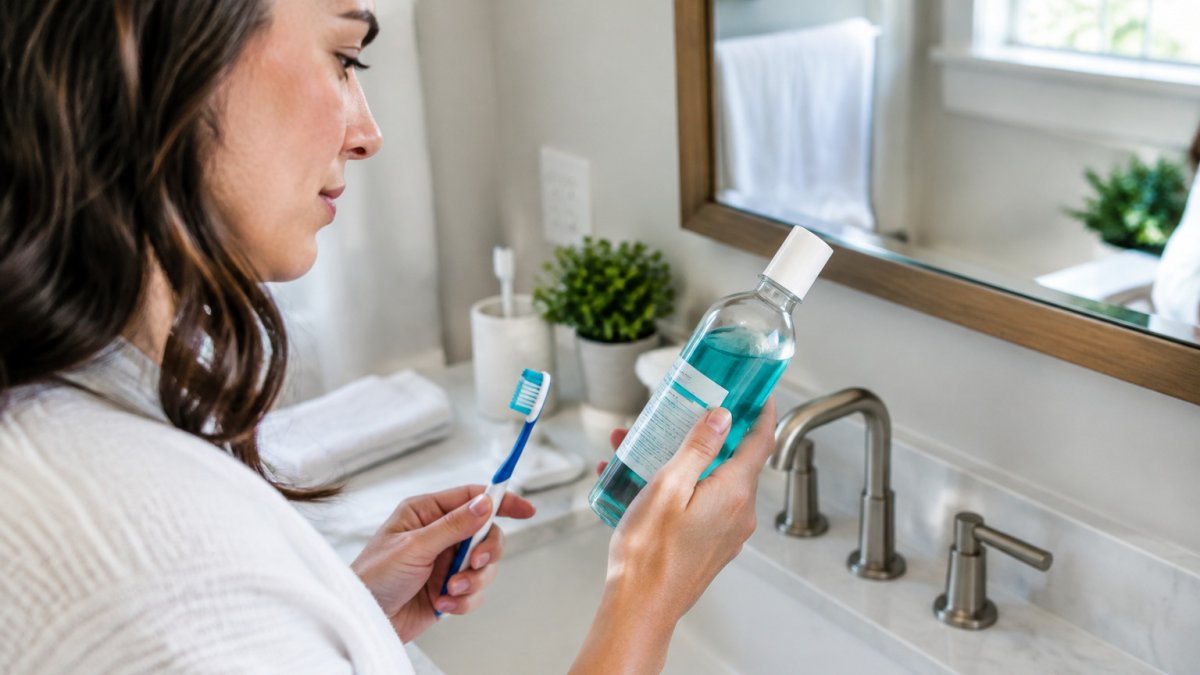
Use this decision path, in order:
- List your top two goals. Common pairings are dry mouth plus cavity risk, or bad breath plus gum tenderness. Write them down before you shop.
- Translate each goal into an active ingredient. Dry mouth points to moisture-supporting ingredients such as xylitol or glycerin in an alcohol-free base. Cavity risk points to fluoride. Bad breath and plaque point to cetylpyridinium chloride (CPC), zinc, or essential oils. Gum concerns point to an antibacterial or antiplaque formula.
- Check for conflicts. If one goal calls for fluoride and another calls for an antiseptic, look for a rinse that lists both on the Drug Facts panel rather than choosing one goal and abandoning the other.
- Confirm the base fits your comfort. If you have dryness or sensitivity, keep the alcohol-free base and let the active ingredient do the work.
- Set a review point. Give a new rinse two to four weeks of consistent use, then judge whether your main symptom improved.
Dry Mouth, Bad Breath and Cavity Prevention
These three goals call for different ingredients, and the mechanism matters more than the marketing name.
For dry mouth, the goal is comfort and moisture rather than a strong antiseptic punch. Alcohol-free rinses with xylitol or glycerin are one option people consider when they want to avoid the sting associated with ethanol. Xylitol also has a sweet taste that can make a rinse easier to use regularly.
Rinses for bad breath often target odor-causing bacteria. CPC and zinc are actives commonly included in formulas for this purpose.
For cavity prevention, fluoride is the ingredient to check, and the concentration on the Drug Facts panel is what counts. Fluoride is commonly included in rinses to support enamel and help reduce cavity risk. Check the label to see whether a rinse contains it.
Watch out: a rinse can cover up bad breath without treating the cause. If odor lasts despite consistent brushing, flossing, and tongue cleaning, see a dental professional rather than switching rinses again.
Best Alcohol-Free Mouthwash for Gums
Gum care involves more than freshening breath. Look for rinses with clear antibacterial or antiplaque labeling, and avoid harsh ingredients if your gums bleed or feel tender. The active ingredient list, not the front label, tells you whether a rinse is formulated for plaque and gingivitis.
Bleeding or swollen gums are a reason to see a dentist, not just to change your rinse. A rinse can support a routine, but it does not replace a professional exam.
Reading the Label Before You Commit
Labels can be confusing, so focus on the Drug Facts panel, which lists active ingredients and their purposes for over-the-counter products in the United States. Compare the active ingredients, not the marketing claims on the front.
- Fluoride: listed with a purpose such as anticavity. Check the concentration, not just the word.
- CPC (cetylpyridinium chloride): listed for antibacterial or plaque-reduction purposes.
- Zinc or essential oils: often listed for odor control.
- Inactive ingredients: glycerin, xylitol, sorbitol, and flavorings shape how the rinse feels and tastes, which affects whether you will actually use it daily.
Also read the warnings section for age limits, pregnancy notes, and any instruction not to swallow. If a rinse lists no active ingredient at all, it is a cosmetic breath freshener, not a therapeutic rinse. Pairing an effective rinse with the appropriate cleaning agent remains essential for maintaining oral hygiene, a balance explored further by the experts at Rifkin & Raanan.
Reading Labels: Active Ingredients That Matter
Labels can be confusing, so focus on three things:
- Fluoride: Commonly included for enamel and cavity-related purposes.
- CPC (cetylpyridinium chloride): A common antibacterial active.
- Zinc or essential oils: Often used for odor control.
Check the "Drug Facts" panel, which lists active ingredients for over-the-counter products in the United States. Compare the active ingredients, not the marketing claims on the front.
Alcohol vs. Alcohol-Free Mouthwash for Gingivitis
Gingivitis is the early stage of gum disease (Probing Periodontal Disease). Both alcohol and alcohol-free rinses can be used as part of a routine, but the ingredients matter more than the alcohol itself.
Some people find alcohol-free rinses more comfortable on inflamed gums. If your mouth stings or feels dry, an alcohol-free option may be easier to keep using every day. Still, the best choice depends on the active ingredients and your dentist's advice.
Does Alcohol-Free Mouthwash Kill Good Bacteria?
Mouthwash does not target only harmful bacteria. Broad antiseptic rinses can reduce many types of bacteria, including some helpful ones. The effect of any rinse on the oral microbiome depends on its active antiseptic ingredient.
Most people do not need to worry about a short rinse each day. If you are concerned about the balance of bacteria in your mouth, talk with a dentist before changing your routine.
Choosing a Best Alcohol-Free Antibacterial Mouthwash
When you shop, start with the label. Look for an alcohol-free formula with a clear antibacterial active ingredient, such as CPC or zinc, and check that it fits your main concern.
Compare products on these points:
- Active ingredients listed on the Drug Facts panel
- Whether fluoride is included
- Taste and how it feels in your mouth
- Any warnings about children or pregnancy
Using Your Mouthwash Correctly and Knowing When to See a Dentist
How you use a rinse changes what it does. The label directions are the baseline, but a few habits make the difference between a rinse that helps and one that works against your toothpaste.
Timing and dosage. Many rinses are used once or twice a day, according to their label directions. Measure the amount the label specifies rather than pouring a rough mouthful, and swish for the full time listed, typically 30 to 60 seconds.
Do not rinse right after brushing. Fluoride toothpaste leaves a reservoir of fluoride on your teeth (Rinsing immediately after brushing effects and recommendations). Rinsing with water or mouthwash immediately after brushing may wash that away.
Choose the order when you use both. If your mouthwash also contains fluoride, using it after brushing is less of a concern, but check the label. If your rinse is antiseptic without fluoride, spacing it away from brushing preserves the toothpaste benefit.
Keep it away from young children. Most over-the-counter rinses carry a warning against use by children under a specified age, often six years, because young children may swallow the product. Children who cannot reliably spit should not use a rinse without a dentist's guidance.
Watch out: using a rinse more often than the label directs does not speed up results and can increase irritation or staining with some antiseptic actives.
What Mouthwash Cannot Do
Mouthwash is a helper, not a replacement for brushing and flossing. It cannot remove plaque that has hardened into tartar, cannot reach between teeth the way floss does, and cannot treat an infection. If a rinse is the main thing you change and your symptoms persist, the rinse is not the problem to solve.
Symptoms That Need a Dentist
See a dentist if you notice persistent bad breath, bleeding gums, tooth pain, sensitivity that does not go away, dryness that lasts more than a couple of weeks, sores that do not heal, or a white or red patch in the mouth. These are signs to evaluate rather than manage with a rinse.
Allergies, Interactions, and When to Ask a Pharmacist
Some people react to flavorings, essential oils, or other ingredients in rinses. If you have had a reaction to a dental product before, read the inactive ingredients list and ask a pharmacist before trying a new one. If you take prescription medications, ask whether a fluoride or antiseptic rinse fits your situation, since some conditions and treatments change what your mouth needs.
Our team recommends checking with a dental professional before adding any new product to your routine, especially if you have a health condition or take other medications.
Ready to see how PROTEITH® fits into your routine? Explore our range and find the option that suits your goals.
Frequently Asked Questions
What is the best non-alcohol mouthwash to use?
No single product is best for everyone. Start with your main concern: dry mouth, gum sensitivity, bad breath or cavity protection. Look for an alcohol-free rinse that lists an active ingredient matching that goal, such as fluoride for enamel or cetylpyridinium chloride for antibacterial action. Check the ingredient list, avoid rinses that irritate your mouth, and ask your dentist or pharmacist which option fits your oral health.
Do dentists recommend alcohol-free mouthwash?
Some people with dry mouth, sensitive gums or irritation from alcohol-based rinses choose alcohol-free mouthwash. Dentists still weigh each patient's needs, so the best choice depends on your history. If you have gingivitis, cavities or a condition affecting saliva, ask your dental professional which rinse and active ingredients suit you.
Does alcohol-free mouthwash kill good bacteria?
Alcohol-free mouthwash can reduce some bacteria, including those that cause plaque and gum inflammation, but it does not target all bacteria equally. Using mouthwash as a supplement to brushing and flossing, rather than as a replacement, helps maintain a balanced mouth.
Can I use alcohol-free mouthwash every day?
Many alcohol-free rinses are labeled for daily use, but you should follow the directions on the product and any instructions from your dentist. Rinse after brushing, use the amount listed, and avoid swallowing it. If you notice irritation, a persistent burning sensation or changes in taste that do not resolve, stop using it and contact a dental professional.


