

Natural Ways to Remove Teeth Stains: 7 Methods
Table of Contents
- Why Teeth Turn Yellow and Brown: Understanding the Causes of Tooth Discoloration
- What You'll Need Before Starting Natural Stain Removal
- 7 Natural Methods to Remove Teeth Stains
- Safety of Natural Teeth Whitening: Protecting Your Enamel
- How to Prevent Teeth Stains and Maintain Results
- When to See a Dentist
- Conclusion
Last Updated: August 30, 2026
Why Teeth Turn Yellow and Brown: Understanding the Causes of Tooth Discoloration
Tooth discoloration occurs through two distinct mechanisms: extrinsic stains (surface-level) and intrinsic stains (embedded in tooth structure). Understanding which type you're dealing with determines whether natural remedies will work. Your teeth naturally yellow over time as the outer enamel layer thins, making the darker dentin beneath more visible (the American Dental Association). Most discoloration can be addressed.
Extrinsic vs. Intrinsic Stains
Extrinsic stains sit on the enamel surface and respond well to natural remedies. They come from external sources: coffee, red wine, tobacco, and tea.
Intrinsic stains live inside the tooth structure in the dentin layer, developing from medication side effects, fluorosis, aging, or internal bleeding. Surface treatments have limited effect because the discoloration is embedded, not on top. Your stain type determines your outcome.
Common Culprits: Chromogens, Tannins, and Acidic Foods
Chromogens are pigmented molecules that bind to enamel. Tannins, found in coffee, tea, and red wine, are aggressive chromogens that accumulate over time, creating visible brown or yellow discoloration.
Acidic foods and beverages accelerate staining by temporarily softening enamel and making it more porous. Citrus, vinegar, soda, and sports drinks create this vulnerability for 20-30 minutes after consumption (peer-reviewed research). This is why rinsing habits matter, they interrupt the window when stains can set.
What You'll Need Before Starting Natural Stain Removal
Gather basic supplies before beginning: baking soda, 3% food-grade hydrogen peroxide, coconut oil, fresh strawberries, turmeric powder, apple cider vinegar, a soft-bristled toothbrush, a small bowl for mixing, and filtered water.
Wear old clothing when applying turmeric or activated charcoal, as these stain fabric permanently. Keep a dark towel nearby and have water handy to rinse immediately if any mixture irritates your gums.
Understand your baseline by examining your teeth in natural light before starting. Natural remedies work gradually, typically taking 2-4 weeks to show visible results (peer-reviewed research).
7 Natural Methods to Remove Teeth Stains
These seven approaches range from gentle to moderately aggressive. Start with gentler methods and progress only if needed. Each targets extrinsic stains effectively; intrinsic stains respond more slowly or not at all.
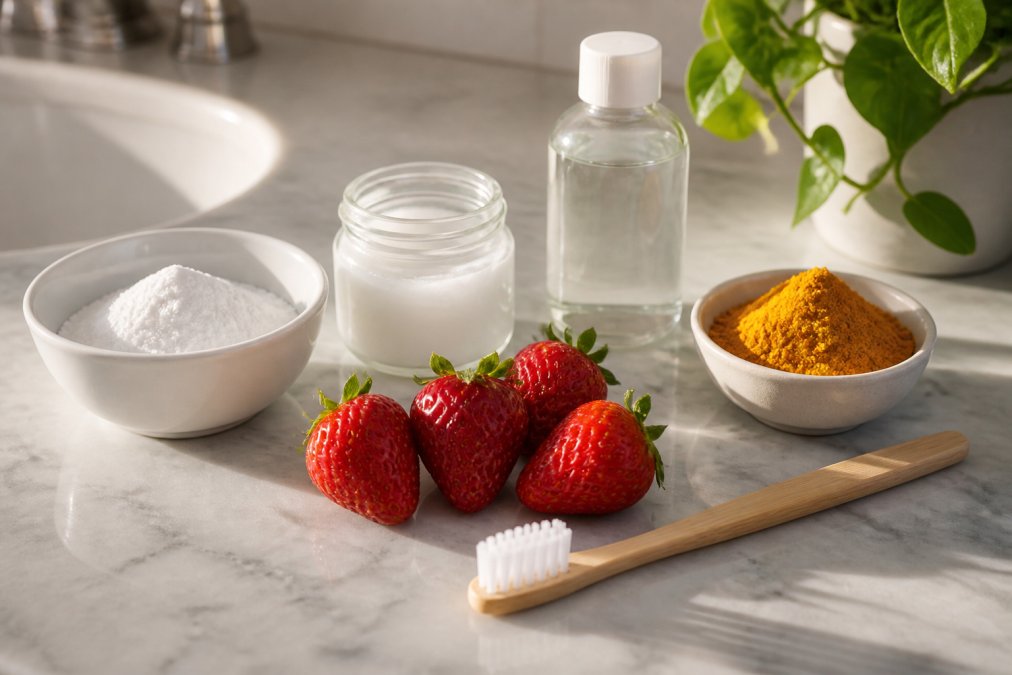
Method 1: Baking Soda and Hydrogen Peroxide Paste
Mix three parts baking soda with one part 3% hydrogen peroxide to form a thick paste. Apply with a soft toothbrush using gentle circular motions for two minutes, then rinse thoroughly. Use 2-3 times weekly, not daily. Baking soda is mildly abrasive and alkaline, while hydrogen peroxide acts as a mild bleaching agent. This dual action makes it effective for extrinsic stains, but overuse increases enamel erosion risk and sensitivity.
Method 2: Oil Pulling with Coconut Oil
Swish one tablespoon of coconut oil in your mouth for 15-20 minutes each morning before eating. Spit into a trash can (not your sink) and rinse with warm water. Coconut oil contains lauric acid with antimicrobial properties that reduce bacteria contributing to plaque and surface discoloration. Results take 2-3 weeks of consistent practice. This gentle method is suitable for daily use without enamel erosion risk.
Method 3: Fruit Enzymes for Stain Removal
Papain from papaya and bromelain from pineapple are proteolytic enzymes that break down protein-based stains. Mash fresh papaya or pineapple into a paste and apply to teeth using a soft brush for 5-10 minutes, then rinse thoroughly. Use 2-3 times weekly. Wait 30 minutes before brushing after application, as fruit is acidic and temporarily softens enamel.
Method 4: Activated Charcoal (With Caution)
Mix activated charcoal powder with water to form a paste. Apply to teeth and let sit for 2-3 minutes, brush gently for one minute, then rinse thoroughly. Limit use to once weekly. Charcoal is highly porous and binds to surface stains effectively through mechanical action, but it's abrasive and poses higher enamel erosion risk than other methods.
Method 5: Apple Cider Vinegar Rinses
Dilute apple cider vinegar heavily: one part vinegar to two parts water. Rinse for 30-60 seconds, then immediately rinse with plain water. Do not brush for 30 minutes afterward. Use no more than once weekly. The acidity poses genuine enamel risks, making this an occasional method rather than a primary approach.
Method 6: Strawberry and Baking Soda Treatment
Mash 2-3 fresh strawberries and mix with one tablespoon of baking soda. Apply to teeth and leave for 5 minutes, brush gently for one minute, then rinse thoroughly. Use 2-3 times weekly. This gentler approach takes 3-4 weeks to show visible improvement and suits people prioritizing enamel safety over speed.
Method 7: Turmeric Paste Application
Mix turmeric powder with coconut oil to form a paste. Apply to teeth and leave for 10 minutes, brush gently, then rinse thoroughly. Use 2-3 times weekly. Turmeric stains fabric and skin, so apply carefully. The whitening effect is subtle and takes 3-4 weeks to become visible, but it offers added anti-inflammatory support for gum health.
Safety of Natural Teeth Whitening: Protecting Your Enamel
Natural doesn't mean risk-free. Understanding potential downsides prevents permanent damage while pursuing cosmetic improvement.
Enamel Erosion Risks and pH Balance
Enamel doesn't regenerate once eroded. Acidic treatments (pH below 7) like apple cider vinegar, citrus, strawberries, and pineapple temporarily soften enamel, making it vulnerable to wear. Alkaline substances like baking soda have the opposite effect. Your mouth naturally maintains pH around 6.5-7.5. Frequency limits allow saliva to restore balance between treatments.
Tooth Sensitivity and Abrasive Methods
Sensitivity develops when enamel thins enough to expose dentin. Abrasive methods like charcoal accelerate enamel thinning. If you already have sensitivity, avoid charcoal and start with gentler methods like oil pulling. The pressure you apply matters as much as the substance, gentle circular motions with a soft brush minimize damage.
Post-Remedy Remineralization
After whitening treatments, avoid acidic foods and beverages for 30 minutes to allow enamel to reharden. Drink water to stimulate saliva production. Consider using a remineralizing toothpaste containing calcium or phosphate for 1-2 weeks after intensive treatments.
PROTEITH® Oral Hygiene System for Sport supports this recovery phase with its natural formulation and proteolytic technology, allowing enamel to rebuild while continuing gentle stain removal. Shop the PROTEITH® Oral Hygiene System for Sport - All-Natural Toothpowder for $14.00 at proteith.com.

How to Prevent Teeth Stains and Maintain Results
Prevention is more effective than treatment. Once you've removed stains, consistent habits maintain results.

Rinsing Habits After Staining Beverages
Rinse immediately after consuming coffee, tea, red wine, or cola. Plain water works, swish for 30 seconds and spit. Using a straw reduces contact between beverages and your front teeth. Wait 30 minutes before brushing, as enamel is temporarily soft from acid exposure and brushing accelerates erosion.
Dietary Changes to Prevent Staining
Drink coffee or tea with milk or cream, proteins in dairy bind to tannins, reducing their ability to attach to enamel. Increase water consumption to rinse your mouth continuously and stimulate saliva production. Eat crunchy vegetables and fruits like apples, carrots, and celery, which mechanically clean teeth and stimulate saliva.
Brushing Technique and Oral Hygiene
Use a soft-bristled brush with gentle circular motions at a 45-degree angle toward your gum line. Apply light pressure and brush for two minutes. Hard brushing with stiff bristles causes enamel erosion and gum recession. Floss daily to remove plaque that traps stain molecules and prevents gum disease.
Consider PROTEITH® Oral Hygiene System for Healthy Gums as your daily maintenance tool. Its all-natural formulation supports stain prevention and gum health without abrasiveness that damages enamel. Shop the PROTEITH® Oral Hygiene System for Healthy Gums - All-Natural Toothpowder for $14.00 at proteith.com.

When to See a Dentist
See a dentist if stains don't improve after 6 weeks of consistent natural treatment, suggesting intrinsic staining requiring professional intervention. Visit if you develop tooth sensitivity during whitening, as this indicates enamel damage. Schedule a checkup for gum bleeding, recession, or persistent discoloration in specific areas, which may indicate underlying dental disease. Intrinsic stains from medication or fluorosis require professional assessment to determine appropriate treatment.
Natural methods effectively remove extrinsic teeth stains when used correctly and consistently. The key is understanding your stain type, choosing appropriate methods, and protecting your enamel throughout the process. For ongoing maintenance and stain prevention, PROTEITH® Oral Hygiene System for Healthy Gums delivers clinically validated results without harsh abrasives that damage tooth structure. Its proteolytic technology gently removes stains while supporting your oral microbiome and immune system, making it ideal for those committed to long-term dental health alongside natural whitening approaches.
Frequently Asked Questions
Q: How can I remove brown stains from my teeth at home naturally?
A: Brown stains often respond well to baking soda and hydrogen peroxide paste applied 2-3 times weekly, or oil pulling with coconut oil for 10-15 minutes daily. Fruit enzymes like bromelain (from pineapple) and papain (from papaya) can also help break down surface discoloration. Results typically appear within 2-4 weeks, though consistency matters. Always start with gentler methods if you have sensitive teeth, and avoid abrasive scrubbing that can damage enamel.
Q: What are the risks of using DIY teeth whitening remedies?
A: Natural remedies carry real risks if used incorrectly. Acidic solutions like apple cider vinegar can erode enamel, while abrasive methods damage the protective layer and expose dentin underneath, causing sensitivity and discoloration. Hydrogen peroxide in high concentrations can irritate gums. Always dilute acids, limit frequency to 2-3 times weekly, and follow remineralization steps. If you experience pain, sensitivity, or gum irritation, stop and consult a dentist.
Q: Can stained teeth be white again using natural methods?
A: Natural methods work best on extrinsic stains (surface discoloration from coffee, tea, or wine). These can fade noticeably with consistent treatment over weeks. Intrinsic stains (inside the tooth structure) respond poorly to home remedies and typically require professional whitening or veneers. The shade you can achieve depends on your natural enamel color, natural methods won't change your baseline tooth color, only remove surface buildup. A dentist can determine your stain type and realistic expectations.
Q: How do I know if a natural remedy is safe for my enamel?
A: Check the pH level: acidic remedies (pH below 7) risk enamel erosion. Baking soda is neutral to slightly alkaline and safer; apple cider vinegar is highly acidic and requires dilution. Avoid abrasive powders if you have existing sensitivity. Always rinse thoroughly after treatment, wait 30 minutes before brushing (to avoid softened enamel damage), and use a remineralizing toothpaste afterward. If you have thin enamel, gum disease, or tooth sensitivity, consult your dentist before trying home whitening methods.
This article was written using GrandRanker

