

Oral Probiotics vs Traditional Mouthwash for Systemic Health
Table of Contents
- How Oral Probiotics and Mouthwash Affect the Oral Microbiome
- How to Improve Oral Microbiome: Probiotic Strains and Daily Practices
- Antiseptic Mouthwash Side Effects: What the Research Shows
- Benefits of Oral Probiotics for Systemic Health: Beyond the Mouth
- Clinical Evidence and Strain-Specific Efficacy
- Safety, Contraindications, and Synergistic Oral Hygiene Routines
- Cost-Benefit Analysis: Oral Probiotics vs Traditional Mouthwash Over Time
- Conclusion
- Frequently Asked Questions
Last Updated: October 1, 2026
How Oral Probiotics and Mouthwash Affect the Oral Microbiome
The oral microbiome is the community of bacteria, fungi, and viruses living in your mouth. It shapes far more than your breath. This guide from PROTEITH® explains how oral probiotics vs traditional mouthwash affect that community in opposite ways. (Source: National Institutes of Health (NIH) on the gut-oral axis)
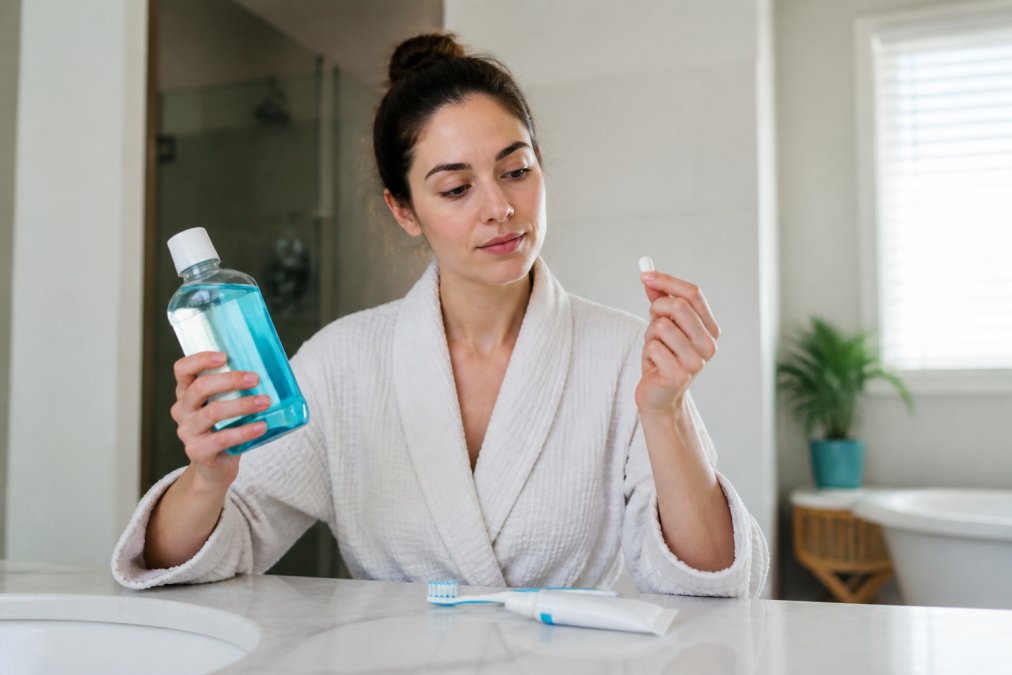
Your mouth hosts hundreds of bacterial species. Most are harmless or helpful. They help digest food and train your immune response. Problems start when the balance tips toward harmful strains.
Traditional mouthwash takes a broad approach. It kills most bacteria, good and bad. Oral probiotics take a targeted approach. They add helpful strains back to your mouth.
That difference matters for your whole body.
The Oral Microbiome and Systemic Health Connection
Your mouth is a gateway to the rest of your body. Bacteria and inflammatory signals from your gums can enter your bloodstream. From there, they reach your heart and other organs.
Antimicrobial Mouthwash: Broad-Spectrum Action and Microbial Balance
Antimicrobial mouthwash uses antiseptic agents like chlorhexidine or essential oils. These agents are bactericidal, meaning they kill bacteria on contact. They also reduce plaque and gingivitis in the short term.
How to Improve Oral Microbiome: Probiotic Strains and Daily Practices
Improving your oral microbiome starts with what you add, not just what you remove. Oral probiotics introduce helpful bacteria that support microbial balance.
Daily practices that help:
- Brush gently twice a day with a soft brush
- Use microbiome-friendly products instead of harsh antiseptics
- Limit sugary drinks that feed harmful bacteria
- Stay hydrated to support saliva flow
- Add probiotic supplementation to your routine
Antiseptic Mouthwash Side Effects: What the Research Shows
Antiseptic mouthwash side effects go beyond a temporary sting. Common issues include dry mouth, altered taste, and staining of teeth with long-term use.
Risks of Long-Term Use and Microbial Resistance
Regular use of OTC mouthwash with antiseptic agents can lead to microbial resistance. Some bacteria survive repeated exposure and adapt. This makes future infections harder to treat.
Benefits of Oral Probiotics for Systemic Health: Beyond the Mouth
The benefits of oral probiotics for systemic health extend well past fresh breath. By supporting microbial balance, they may help reduce inflammation linked to cardiovascular health.
Gum Health, Halitosis, and the Gut-Oral Axis
Certain strains target periodontal disease and halitosis directly. Streptococcus salivarius, for example, may crowd out odor-causing bacteria. Lactobacillus strains may support gum tissue health.
Clinical Evidence and Strain-Specific Efficacy
Clinical trials on oral probiotics show mixed but promising results. The strongest signal comes from strain-specific research, not from broad "probiotic" claims. Outcomes depend on which strain is used, at what dose, and in what delivery format.
Strains With the Most Research Behind Them
Streptococcus salivarius K12 is the most studied oral probiotic strain. It was originally isolated from the oral cavity of healthy children and produces two lantibiotics, salivaricin A2 and salivaricin B, that inhibit Streptococcus pyogenes and other pathogens. Clinical work has focused on halitosis, recurrent pharyngotonsillitis, and otitis media in children. A common pattern in published trials is a daily dose in the range of one billion colony-forming units (CFU), often delivered as a lozenge that dissolves slowly in the mouth so the strain can colonize the oral surfaces rather than being swallowed immediately.
What the Mouthwash Evidence Actually Shows
The evidence for antiseptic mouthwash is strongest for short-term, targeted use. Chlorhexidine gluconate at 0.12% is widely regarded as the gold standard for reducing plaque and gingivitis in clinical trials, and it is frequently used as the positive control in probiotic studies. Essential-oil rinses containing thymol, eucalyptol, menthol, and methyl salicylate have also shown plaque and gingivitis reductions in randomized trials, though generally smaller than chlorhexidine.
How to Read a Probiotic Label
- Genus, species, and strain designation, "Lactobacillus reuteri" is not enough; the strain code matters.
- CFU count at end of shelf life, not at manufacture. Many products list a number that has already dropped by the time you buy it.
- Delivery format, a lozenge or chewable that coats the mouth is more relevant for oral colonization than a swallowed capsule.
- Third-party testing, independent verification reduces the risk of mislabeled strains.
For mouthwash, the evidence for short-term plaque control is solid. The evidence for long-term daily use without harm is weaker. Most dental professionals recommend reserving antiseptic rinses for short-term needs such as after periodontal surgery or during an acute gum flare-up, and using a gentler routine the rest of the time.
Safety, Contraindications, and Synergistic Oral Hygiene Routines
Oral probiotics are generally well tolerated. But they are not right for everyone. People with weakened immune systems should talk to a doctor first.
Contraindications to watch:
- Severe immune suppression
- Recent oral surgery without medical clearance
- Known allergies to specific strains or ingredients
Cost-Benefit Analysis: Oral Probiotics vs Traditional Mouthwash Over Time
Cost is where the comparison gets interesting, and it is also where most articles stop short. A bottle of over-the-counter antiseptic mouthwash is cheap upfront. Oral probiotics cost more per bottle. But the real comparison is not bottle price versus bottle price. It is the total cost of a daily oral care routine over months and years, including the downstream costs of treating problems that a poor routine can contribute to.
The Upfront Math
A typical 1-liter bottle of antiseptic mouthwash lasts about a month with twice-daily use.
Oral probiotic products vary widely.
The Costs That Do Not Show Up on the Shelf
Daily antiseptic use has documented downsides that carry their own costs:
- Tooth staining from chlorhexidine often requires professional cleaning to remove, and in some cases cosmetic treatment.
- Dry mouth can increase caries risk, which means more frequent restorative work.
- Taste alteration is usually temporary but can affect diet and quality of life during use.
- Microbial shifts may make the oral environment more hospitable to opportunistic organisms over time.
The Downstream Costs of Periodontal Disease
This is the part most consumer articles skip. Periodontal disease is not just a mouth problem. It is a chronic inflammatory condition, and treating it is expensive. Scaling and root planing, periodontal maintenance visits, and in advanced cases surgical intervention can run into the thousands of dollars over a patient's lifetime. The American Dental Association and the Centers for Disease Control and Prevention have both noted the scale of untreated periodontal disease in the adult population.
A Practical Framework
Instead of asking "which is cheaper," ask three questions:
- What is this product actually doing for me daily? A rinse that kills most bacteria is doing something different from a lozenge that adds specific strains.
- What is my risk profile? Someone with a history of gum disease, dry mouth, or cardiovascular risk factors has more reason to care about long-term microbial balance than someone with no history.
- What is the cost of the alternative? If the alternative is a periodontal maintenance program, the comparison shifts.
| Factor | Traditional Mouthwash | Oral Probiotics |
|---|---|---|
| Cost | Varies | Varies |
| Daily use suitability | Short-term preferred | Designed for daily use |
| Effect on beneficial bacteria | Broad kill | Supports balance |
| Downstream cost risk | Staining, dry mouth, caries | Strain-dependent, generally low |
| Best for | Acute gum issues, post-surgical | Daily microbiome support |
PROTEITH® fits the daily-support category. It removes stains, freshens breath, and reduces bacteria that contribute to tartar. It also supports your immune system through systemic absorption.
Conclusion
Choosing between oral probiotics vs traditional mouthwash for systemic health comes down to your goal. If you want a quick fix for a gum flare-up, an antiseptic rinse has a place. If you want daily support for your gums, breath, and whole-body health, a microbiome-friendly approach makes more sense.
Frequently Asked Questions
What is the best mouthwash for a healthy oral microbiome?
The best mouthwash for a healthy oral microbiome avoids broad-spectrum antiseptics like chlorhexidine or alcohol, which can wipe out beneficial bacteria along with harmful ones. Look for alcohol-free, pH-balanced rinses that contain prebiotics or probiotic strains such as Streptococcus salivarius. Some people use oral probiotic lozenges or powders instead of a rinse entirely. If you do use an antiseptic mouthwash, limit it to short-term use under a dentist's guidance to prevent dysbiosis and support microbial balance.
Why do some health experts warn against antiseptic mouthwash?
Experts warn against antiseptic mouthwash because it can disrupt the oral microbiome by killing beneficial bacteria, not just pathogens. This may lead to dysbiosis, which is linked to inflammation, periodontal disease, and even systemic conditions. Some research suggests that frequent use of antibacterial mouthwash may interfere with the body's nitric oxide production, affecting cardiovascular health. Additionally, long-term use can cause staining, altered taste, and microbial resistance.
Does probiotic mouthwash actually improve systemic health markers?
Some clinical trials suggest that oral probiotics containing strains like Lactobacillus and Bifidobacterium can reduce gum inflammation and improve markers of systemic health, such as C-reactive protein. However, results vary by strain, dose, and duration. Probiotics may support immune response and microbial balance, but they are not a proven standalone treatment for systemic conditions. For personalized advice, consult a healthcare professional.
How does the oral microbiome influence systemic inflammation?
The oral microbiome can influence systemic inflammation through the gut-oral axis. When pathogenic bacteria overgrow in the mouth, they can enter the bloodstream through inflamed gums, triggering an immune response that raises inflammatory markers throughout the body. This chronic low-grade inflammation is associated with cardiovascular disease, diabetes, and other systemic conditions. Maintaining a balanced oral flora with probiotics and good oral hygiene may help reduce this inflammatory burden.

