

Top Oral Supplements for Pet Bad Breath: A 2026 Guide
Table of Contents
- Why Pet Bad Breath Happens: Dog Bad Breath Causes
- What to Look for in Oral Supplements for Pet Bad Breath
- Dog Dental Powder for Tartar: How It Works and What to Expect
- Dog Dental Water Additive: Convenience vs. Control
- How to Remove Tartar from Dog Teeth: Supplements vs. Brushing
- Evaluating Effectiveness: What Oral Supplements Can and Cannot Do
- Frequently Asked Questions
Last Updated: October 6, 2026
Why Pet Bad Breath Happens: Dog Bad Breath Causes
Pet bad breath, or halitosis, is usually a symptom rather than a standalone problem. In most dogs and cats, it traces back to bacteria and plaque accumulating on the teeth and gums. When that film sits undisturbed, it hardens into tartar, and the odor gets worse.
At PROTEITH®, we approach oral care from a simple starting point: the mouth has its own microbiome, and when it falls out of balance, breath is often the first sign. That is why a product like our tooth powder for dogs focuses on daily support rather than a one-time fix.

The most common causes of dog bad breath include:
- Plaque and tartar buildup along the gumline
- Gum inflammation and early periodontal disease
- Food particles trapped between teeth
When Bad Breath Signals Something More Serious
Persistent bad breath that does not improve with routine care deserves a veterinary look. Warning signs include sudden onset, weight loss, drooling, difficulty eating, or a sweet or ammonia-like odor. These can point to issues beyond the mouth, so contact your veterinarian rather than reaching for another supplement.
American Veterinary Medical Association guidance on pet dental care
What to Look for in Oral Supplements for Pet Bad Breath
The best oral supplements for pet bad breath are the ones that fit your pet's daily routine and target the actual cause, not just the smell. A supplement that masks odor without addressing plaque will disappoint you within weeks. Because most products on the market are sold as general wellness items rather than drugs, the label is often the only information you get, so read it the way you would read a food label, not a marketing page.
How We Evaluate Products
To keep this guide useful rather than promotional, we score every product against the same five criteria. You can apply the same test to anything you find on a shelf or a listing page:
- Active ingredients and dose: Is the breath-freshening or plaque-supporting ingredient listed with an amount, or buried in a "proprietary blend"? A named ingredient with a stated amount is verifiable; a blend is not.
- Species and size fit: Is the serving size given by body weight for dogs, cats, or both? A product dosed only for a 50-pound dog is not a cat product.
- Format and adherence: Powder, water additive, chew, or soft treat, which one will your pet actually accept every day?
Ingredient-Level Safety
Ingredient quality separates real oral support from marketing, but "natural" is not the same as "safe for every pet." A few practical points:
- Chlorophyll and parsley: Chlorophyll, found in curly parsley, is a common odor-neutralizing ingredient. Parsley in culinary amounts is generally considered safe for dogs, but concentrated parsley or parsley oil should be used cautiously in cats and in pets with kidney issues.
- Probiotics and postbiotics: These support the oral microbiome. Strain matters, a product should name the strain, not just say "probiotics." Postbiotics (inactivated bacterial components) tend to be more stable on a shelf than live cultures.
- Xylitol and other sweeteners: Xylitol is highly toxic to dogs even in small amounts (Xylitol Poisoning in Dogs). Check every chew, soft treat, and toothpaste-style product for it. This is the single most important label check on this list.
If your pet has allergies, kidney disease, diabetes, or is on medication, run the ingredient list past your veterinarian before starting anything new.
Species and Age Differences
Dogs and cats are not interchangeable here. Cats are more sensitive to many plant compounds and essential oils, and they are more likely to refuse a powder mixed into food. Puppies and seniors also differ: puppies are still developing and should not receive adult-dose supplements without veterinary guidance, while seniors are more likely to already have periodontal disease that a supplement cannot reverse.
A reasonable rule: match the product to the pet in front of you, not to the average pet in the reviews.
Ingredients That Support Oral Health
Many pet owners look for natural ingredients like chlorophyll for odor neutralization. Probiotics and postbiotics support the oral microbiome, while colostrum and amino acids contribute to everyday immune and tissue care.
Our JR & Felix Amino 360 combines plant and mineral sources of amino acids with ingredients intended to help reduce tartar buildup and freshen breath. It also supports skin and coat care, which matters because oral health and overall wellness are connected.
Dog Dental Powder for Tartar: How It Works and What to Expect
Dog dental powder for tartar works by introducing ingredients into your pet's mouth that help break down plaque and reduce the bacteria that contribute to buildup. You sprinkle it over food, and it goes to work during normal eating and chewing.
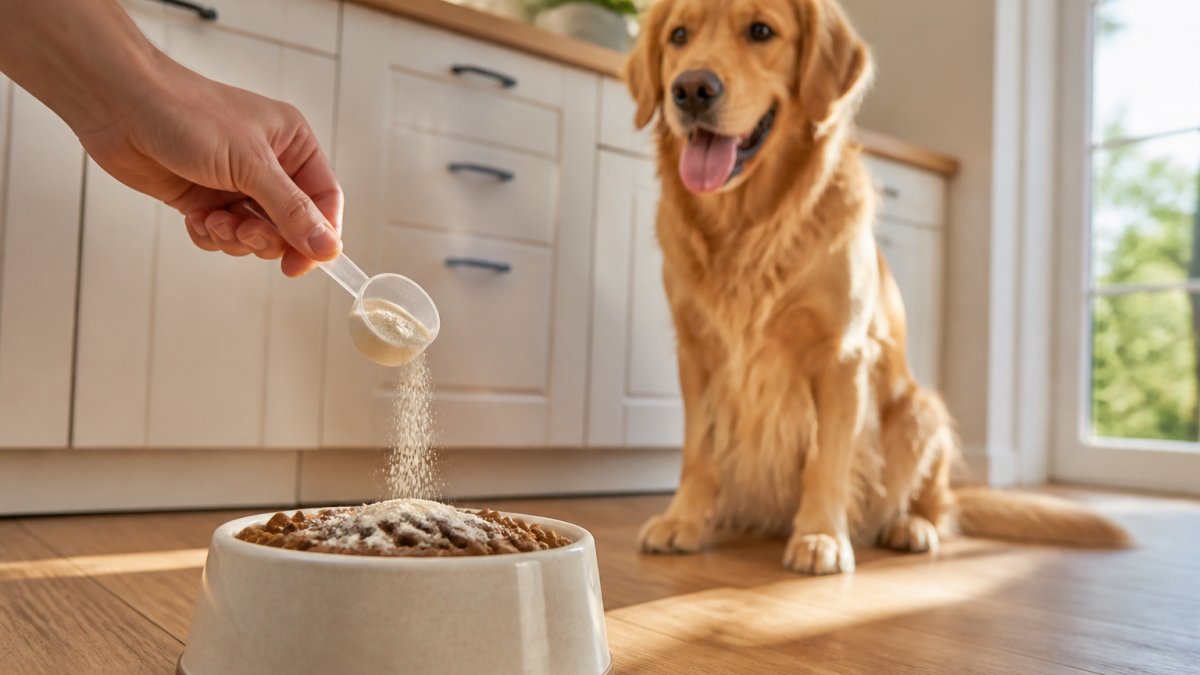
What to expect, realistically:
- Week 1-2: fresher breath may be noticeable first
- Week 3-4: less visible film on the teeth with consistent use
- Ongoing: support for reducing new tartar, not removal of hard deposits already there
Powder is easy to use and works well for pets that eat reliably. The trade-off is control: you cannot see exactly how much reaches the teeth, so consistency matters more than with brushing.
Dog Dental Water Additive: Convenience vs. Control
A dog dental water additive is the lowest-effort option. You add it to the water bowl, and your pet drinks it throughout the day. For busy owners or pets that resist handling, that convenience is real.
The downside is dosage control. If your dog drinks less on a hot day or shares a bowl with another pet, intake varies. Water additives suit maintenance and mild breath concerns.
| Format | Effort | Control | Best For |
|---|---|---|---|
| Powder | Low | Medium | Pets that eat on schedule |
| Water additive | Lowest | Low | Busy owners, mild cases |
| Dental chew | Low | Medium | Chewers, daily treat routine |
| Soft treat | Low | Medium | Picky eaters |
| Brushing | High | Highest | Serious tartar, prevention |
How to Remove Tartar from Dog Teeth: Supplements vs. Brushing
Learning how to remove tartar from dog teeth starts with an honest distinction. Supplements and powders help reduce the bacteria that contribute to tartar. They do not scrape off hard deposits that have already formed.
Brushing remains the most direct method for mechanical removal at home. A soft pet toothbrush with a pet-safe product lifts plaque before it hardens. For established tartar, a veterinary cleaning is the only reliable removal.
Where supplements fit:
- They support daily oral hygiene between brushings
- They help slow new buildup
- They freshen breath as part of a routine
- They are not a replacement for professional dental care
Evaluating Effectiveness: What Oral Supplements Can and Cannot Do
Most of the top-ranking pages on this topic either list products or repeat that supplements "support" oral health without saying what that means. This section takes the opposite approach: it separates what has reasonable support from what is mostly marketing, so you can set realistic expectations before you spend money.
What Has Reasonable Support
- Reducing odor-causing bacteria: Ingredients that target the bacteria responsible for volatile sulfur compounds, the source of most bad breath, have a plausible mechanism, and short-term breath improvement is the effect owners notice first.
- Slowing new plaque and tartar formation: Daily-use powders and water additives can help interrupt the plaque cycle between brushings. The benefit is prevention of new buildup, not removal of what is already there.
- Supporting the oral microbiome: Probiotics and postbiotics aim to shift the bacterial balance in the mouth. This is an active area of research, and results vary by strain and by pet.
What Is Mostly Marketing
- "Removes tartar" or "dissolves plaque" claims: Hard tartar is mineralized and bonded to the tooth. No supplement, powder, or water additive scrapes it off. Only a dental cleaning does that.
- "Cures bad breath" claims: Bad breath is a symptom. A product that claims to cure it is either masking odor or overstating what it does.
- Instant results: Breath improvement, when it happens, typically shows up over days to weeks of consistent use, not after one serving.
- "Vet-approved" without a name: Approval is not a regulated category for supplements. A specific veterinarian's recommendation means something; a generic badge does not.
How to Judge a Product Yourself
A simple test: ask what the product is doing and how. If the answer is "it freshens breath" with no mechanism, treat it as a breath freshener, not oral care. If the answer names an ingredient, a target (plaque, bacteria, tartar), and a daily dose, you have something you can evaluate.
When to Stop Supplementing and See a Veterinarian
If breath stays foul after several weeks of daily use, that is a signal to see your veterinarian, not to buy a stronger supplement. Persistent halitosis can point to periodontal disease, a broken tooth, an oral mass, or a systemic issue such as kidney disease or diabetes. Warning signs that warrant an exam rather than another product include:
- Sudden onset of bad breath in a pet that previously had none
- Weight loss, drooling, dropping food, or chewing on one side
- A sweet, fruity, or ammonia-like odor
- Bleeding gums, loose teeth, or visible tartar along the gumline
Supplements complement brushing and professional dental care. They do not replace either, and they are not a treatment for disease.
For owners who want one product doing double duty, our JR & Felix Amino 360 tooth powder for dogs supports oral care, skin, and coat in a single daily routine. It is available at $12.00.
Frequently Asked Questions
What is the best oral supplement for dog bad breath?
There is no single best option for every pet. The right choice depends on your dog's needs and your routine. Dental powders like JR & Felix Amino 360 ($12.00) combine plant and mineral amino acids to help reduce tartar and freshen breath. Water additives are convenient for dogs that resist brushing. Look for products with natural ingredients, clear dosing instructions, and a format your dog will accept. Always check with your veterinarian before starting a supplement, especially if your dog has health conditions.
Do oral supplements actually help with pet bad breath?
Oral supplements can help manage mild bad breath by reducing plaque and tartar buildup, but they are not a substitute for professional dental care. Products with ingredients like chlorophyll, probiotics, or amino acids may support oral health as part of a daily routine. If bad breath persists despite consistent use, it could signal dental disease or another health issue that needs veterinary attention. Supplements work best alongside regular brushing and checkups.
How long does it take for dog dental supplements to work?
Most dog dental supplements take two to four weeks of consistent daily use before you notice fresher breath. Some dogs respond faster, while others with significant tartar buildup may need longer. Results depend on the severity of the problem, the product's ingredients, and how faithfully you use it. If you see no improvement after a month, or if your dog shows signs of pain or difficulty eating, schedule a veterinary exam.
Can dog bad breath be a sign of dental disease?
Yes. Persistent bad breath is one of the most common signs of periodontal disease in dogs. Other warning signs include red or bleeding gums, loose teeth, drooling, and reluctance to chew. According to veterinary dentists, most dogs over age three have some degree of dental disease. If your dog's breath is consistently foul despite home care, a veterinary exam and professional cleaning may be necessary to rule out infection or other underlying conditions.
Pet bad breath is stubborn, and no single product erases years of buildup overnight. At PROTEITH®, we built our oral care around microbiome-friendly, natural ingredients that support healthy gums and teeth, freshen breath, and reduce the bacteria that contribute to tartar. Our clinically validated approach doubles as a dietary supplement, so daily care supports your pet's long-term wellness too. Get started with PROTEITH® and give your pet fresher breath and a healthier mouth.

