

Vegan Oral Hygiene Products for Adults: 2026 Guide
Table of Contents
- What Adults Need From Vegan Oral Hygiene Products
- Vegan Toothpaste: Fluoride, Hydroxyapatite, and What to Check
- Vegan Mouthwash: Alcohol-Free and Microbiome-Friendly Options
- Vegan Dental Floss: Woven, Compostable, and PFAS-Free
- Cruelty-Free Dental Care: Certifications and What They Mean
- Tooth Powder and Alternative Formats: What Adults Should Know
- Building a Complete Vegan Oral Hygiene Routine
- Conclusion: Choosing the Right Vegan Oral Hygiene Products
- Frequently Asked Questions
Last Updated: October 4, 2026
What Adults Need From Vegan Oral Hygiene Products
Vegan [oral hygiene](/products/new-proteith-oral-hygiene-system-for-healthy-gums-all-natural-toothpowder-1-6-oz) products for adults are toothpastes, mouthwashes, flosses, and tooth powders made without animal-derived ingredients and without testing on animals. At PROTEITH®, we built our oral care system around that standard because the ingredients in your mouth end up in your body.
The adult mouth has different demands than a child's. Receding gums, sensitivity, and years of coffee or wine stains change what a formula needs to do. Below, we break down how to read a label, which formats work, and how to assemble a full routine.
Adult-Specific Dental Needs
Gum recession exposes the softer root surface, which wears away faster than enamel. Adults also carry decades of stain accumulation and often manage sensitivity that children do not.
That means an adult vegan formula has to be low-abrasion, gentle on exposed dentin, and effective at lifting surface stains without scrubbing enamel down. A product designed for a child's teeth will not meet those demands.
Selection Criteria: What Matters Most
Five criteria decide whether a vegan oral care product is worth your money:
- Abrasion level: Fine powders and low-RDA pastes protect exposed roots
- Active ingredient: Fluoride, hydroxyapatite, or enzymatic action, and whether the label states which
- Vegan verification: A named certifier, not just a "plant-based" claim
- Free-from list: No SLS, parabens, artificial flavors, or PFAS
- Format fit: Paste, powder, or foam, matched to your sensitivity level
Vegan Toothpaste: Fluoride, Hydroxyapatite, and What to Check
The fluoride question splits the vegan oral care market, and it deserves a straight answer. Fluoride remains the most studied cavity-prevention ingredient available, and the CDC fluoride and oral health guidance explains how it hardens enamel and reverses early decay.
Fluoride-free options lean on hydroxyapatite, a calcium phosphate mineral that makes up most of your tooth enamel. Early research suggests it can help remineralize enamel, though the evidence base is smaller than fluoride's.
So how do you choose? If you have a history of cavities, fluoride is the safer bet. If you have fluorosis concerns or simply prefer to avoid it, hydroxyapatite is a reasonable alternative. Either way, check that the label names the active ingredient and its concentration rather than hiding behind "natural formula."
Vegan Mouthwash: Alcohol-Free and Microbiome-Friendly Options
Alcohol-based mouthwash kills bacteria indiscriminately, including the beneficial strains that keep your mouth balanced. A microbiome-friendly mouthwash takes a narrower approach: it targets odor-causing and plaque-forming bacteria while leaving the rest of the oral ecosystem intact.
Look for alcohol-free formulas sweetened with xylitol rather than artificial sweeteners. Xylitol also helps reduce cavity-causing bacteria, which is why we include it in our toothpowder.
Vegan Dental Floss: Woven, Compostable, and PFAS-Free
Conventional floss is a hidden problem for vegan households, and the label rarely tells you why. Three separate issues can make a spool non-vegan or non-ideal:
- The wax coating. Many flosses are slicked with beeswax, which is animal-derived. Plant alternatives include candelilla wax (from a shrub) and carnauba wax (from a palm leaf).
- The fiber. Nylon and PTFE (polytetrafluoroethylene, sold under the brand name Teflon) are synthetic and not biodegradable. Silk is animal-derived. Plant-based options include bamboo, cornstarch-derived PLA, and recycled cotton.
- The glide coating. Some flosses use PFAS, per- and polyfluoroalkyl substances, for slip. These are the same class of persistent "forever chemicals" that regulators have scrutinized for years, and they do not break down in the environment or the body.
A Vegan Floss Verification Checklist
Run any spool through these five questions before you buy:
- Does the packaging name the wax? If it says only "wax" or "coating," assume beeswax until the brand confirms otherwise.
- Does it name the fiber? "Silk" is animal-derived unless the brand documents ahimsa (non-harm) harvesting, which most do not.
- Is it PFAS-free? Look for an explicit "PFAS-free" or "PTFE-free" statement, not just "glide."
- Is the coating certified? A Vegan Society trademark or Leaping Bunny logo on the package is stronger than a website claim.
- What happens after disposal? Compostable floss belongs in a home or industrial compost stream, not the trash, and only if the packaging says so.
Woven vs. Smooth: Why Texture Matters
Woven floss made from plant-based fibers and coated in candelilla or carnauba wax grips plaque better than smooth nylon because the weave creates friction against the tooth surface. That friction is what removes sticky biofilm, not the floss's thickness.
Compostable silk floss exists too, but check whether the silk is harvested without harming the moths, since not all silk production qualifies as cruelty-free. Ahimsa silk, sometimes called peace silk, allows the moth to emerge before the cocoon is processed; conventional silk does not.
Cruelty-Free Dental Care: Certifications and What They Mean
"Cruelty-free" and "vegan" are not the same claim, and the gap trips up a lot of shoppers. Cruelty-free means no animal testing at any stage of development. Vegan means no animal-derived ingredients anywhere in the formula or the manufacturing process. A product can be one without being the other: a beeswax-based floss can be cruelty-free but not vegan; a plant-based paste tested on animals in a contract lab can be vegan but not cruelty-free.
How the Major Certifications Actually Work
Third-party certification is what separates a real claim from a marketing line, because it requires documentation and, in most cases, periodic audits. (Source: microbiome-friendly mouthwash)
- Leaping Bunny (Cruelty Free International): Requires a brand to audit its entire supply chain, including ingredient suppliers and contract manufacturers, and to recommit annually. It does not certify that a product is vegan.
- Vegan Society Trademark: Requires that no animal-derived ingredients are used and that no animal testing occurred, either by the brand or on its behalf. It is the closest thing to a combined vegan-plus-cruelty-free seal.
- PETA Beauty Without Bunnies: Offers both a cruelty-free and a vegan tier, but relies more heavily on brand attestation than on supply-chain audits.
A brand that simply prints "not tested on animals" on the box has verified nothing. Check the certifier's public registry directly, all three maintain searchable databases. If the brand is not listed, the claim is unverified regardless of what the label says.
PROTEITH® Oral Hygiene System for Healthy Gums – All-Natural Toothpowder →
The Ingredient-by-Ingredient Vegan Audit
Animal derivatives hide in oral care under names that do not sound animal at all. Run any product through this list:
Ingredient on label |
What it usually is |
Vegan alternative |
|---|---|---|
Glycerin |
Can be animal tallow or vegetable |
Look for "vegetable glycerin" |
Stearic acid |
Often animal fat |
Plant-derived stearic acid |
Beeswax / cera alba |
Bee-derived |
Candelilla or carnauba wax |
Shellac / lac resin |
Insect secretion |
Plant resins or none |
Carmine / cochineal |
Crushed insects (red color) |
Beet or annatto color |
Calcium phosphate |
Can be bone-derived |
Mineral or synthetic source |
Sodium lauryl sulfate (SLS) |
Usually plant-derived, but can be animal |
Not a vegan issue, but a common irritant |
Glycerin is the single most common hidden animal ingredient in toothpaste, because most commercial glycerin is a byproduct of soap manufacturing that can start from either tallow or vegetable oil. If the label does not specify "vegetable glycerin," ask the brand.
Manufacturing Disclosures to Request
Certification covers the finished product, but two manufacturing questions sit outside most seals:
- Is the product tested on animals by a contract lab? Some brands outsource testing to a third party and claim they personally did not test.
- Are the ingredient suppliers independently verified? A vegan brand can still buy from a supplier that tests individual ingredients on animals.
A brand that answers both questions in writing, and points you to a registry listing, is doing the work. A brand that deflects to "we love animals" is not.
Tooth Powder and Alternative Formats: What Adults Should Know
Tooth powder has moved from a niche curiosity to a legitimate adult format, and the reason is simple: powder lets you control abrasion without the fillers, humectants, and preservatives that paste requires.
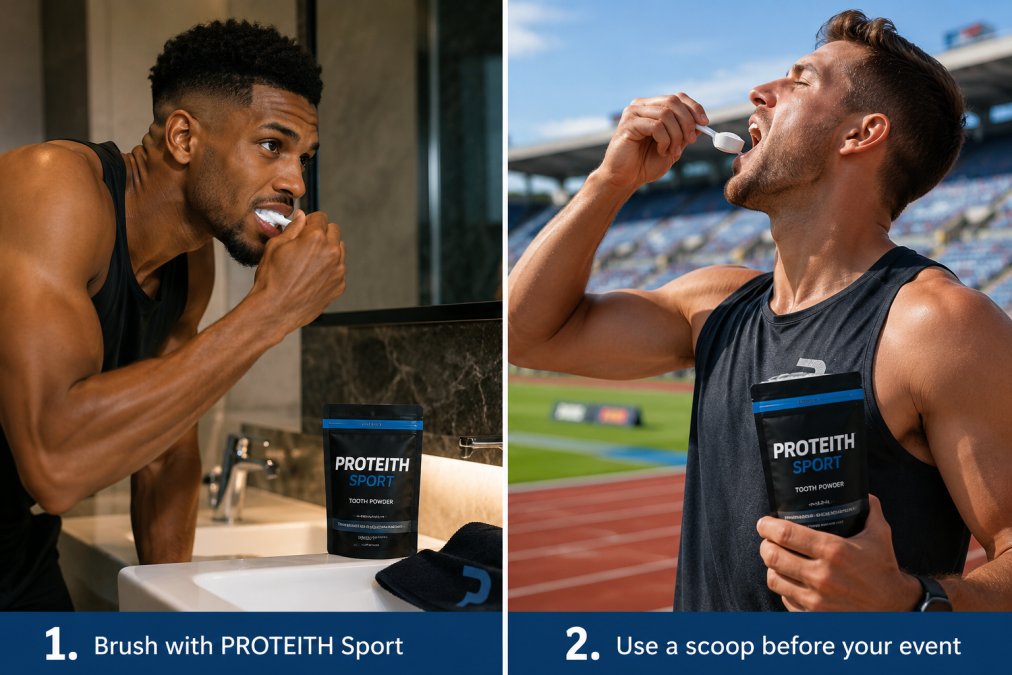
PROTEITH® Oral Hygiene System for Healthy Gums is an all-natural toothpowder built for adults managing bleeding gums and irritation. It is fluoride-free, sweetened with xylitol, and users report fresher breath, cleaner teeth, and reduced bleeding. For stain removal and immune support, the Sport formula takes the same approach with a different focus.
A quick format comparison:
Format |
Best For |
Watch Out For |
|---|---|---|
Toothpaste |
Everyday cavity prevention |
Abrasives, SLS, artificial flavors |
Tooth powder |
Sensitive gums, stain removal |
Coarse grit if poorly milled |
Mouthwash |
Breath, hard-to-reach bacteria |
Alcohol drying the mouth |
Woven floss |
Plaque between teeth |
Unverified wax coatings |
Building a Complete Vegan Oral Hygiene Routine
A complete adult routine covers three steps, twice a day, plus flossing once daily. Brushing alone misses roughly a third of each tooth's surface, so the floss and rinse steps are not optional extras.
Flat-lay photograph of an adult's bathroom counter with a bamboo toothbrush, a small jar of tooth powder, a glass bottle of mouthwash, and a spool of woven dental floss arranged neatly on a light wood surface
Here is how we would sequence it:
- Morning: Brush with toothpowder for two minutes, then rinse with an alcohol-free mouthwash
- Midday: Rinse with water after meals to clear debris
- Evening: Floss with woven floss, then brush again
- Weekly: Check your gum line for changes in color or tenderness
Conclusion: Choosing the Right Vegan Oral Hygiene Products
Sorting through vegan oral hygiene products for adults comes down to reading labels honestly and matching the format to your actual dental needs. Fluoride or hydroxyapatite, paste or powder, certified or self-declared: each choice has a trade-off, and none of them should be made on packaging alone.
At PROTEITH®, we built our oral hygiene system to close that gap. Our toothpowder is fluoride-free, microbiome-friendly, and free from harsh abrasives and artificial additives, and it doubles as a dietary supplement to support your immune system alongside your smile. It is clinically validated and designed for adults who want one product doing more than one job.
Shop Now and see what a cleaner mouth and a healthier body feel like together.
Frequently Asked Questions
What should adults look for in vegan oral hygiene products?
Check the ingredient list for animal-derived components like glycerin (can be animal-based), propolis, and calcium carbonate from bone. Look for cruelty-free certifications such as Leaping Bunny. Verify fluoride content if you need cavity protection, and confirm the product is free from SLS, parabens, and artificial flavors. For sensitive teeth, hydroxyapatite or potassium nitrate are helpful additions.
Is fluoride toothpaste vegan?
Fluoride itself is a mineral and is vegan. The issue is other ingredients in the toothpaste, such as glycerin (often animal-derived), stearic acid, and certain flavorings. Many fluoride toothpastes also contain animal-derived ingredients or are tested on animals. Check the label for a vegan certification and confirm the glycerin source is plant-based.
How can you tell whether dental floss is vegan?
Traditional dental floss often contains beeswax or shellac, both animal-derived. Vegan floss uses plant-based waxes like candelilla or carnauba. Also check for PTFE (Teflon) and PFAS, which are synthetic and may not align with vegan values. Look for woven silk or bamboo fiber floss, and verify the packaging is plastic-free if sustainability matters to you.
Are hydroxyapatite tooth powders vegan?
Hydroxyapatite used in tooth powders is typically synthetic or derived from minerals, making it vegan. However, some brands may use bone-derived hydroxyapatite, so check the source. Vegan hydroxyapatite tooth powders are fluoride-free and support enamel remineralization. Confirm the product is free from animal testing and contains no animal-derived ingredients like gelatin or animal glycerin.

