

Natural Microbiome Friendly Toothpaste: 2026 Buying Guide
Table of Contents
- What Is the Oral Microbiome and Why Does It Matter?
- Benefits of Prebiotic Toothpaste for Your Oral Ecosystem
- Key Ingredients to Look for in Microbiome Friendly Toothpaste
- Natural Toothpaste Ingredients to Avoid
- Best Natural Toothpaste for Sensitivity: What to Consider
- Fluoride vs. Fluoride-Free: Making an Informed Choice
- Our Top Pick: PROTEITH® Healthy Gums Toothpowder
- Conclusion: Your Next Step to a Balanced Mouth
- Frequently Asked Questions
Last Updated: September 4, 2026
What Is the Oral Microbiome and Why Does It Matter?
Your mouth hosts hundreds of species of bacteria, fungi, and viruses that together form the oral microbiome. This microbial community is the foundation of your dental hygiene, influencing everything from breath freshness to gum health. When beneficial bacteria thrive, they help protect your teeth and gums from harmful pathogens.
Traditional toothpaste often disrupts this delicate ecosystem with harsh antibacterial agents that wipe out both harmful and beneficial bacteria alike. This guide from PROTEITH® breaks down what to look for when you buy natural microbiome friendly toothpaste.
A balanced oral ecosystem does more than prevent cavities. Research from the National Institutes of Health on the oral microbiome highlights that oral bacteria can influence systemic health, connecting gum disease to conditions like diabetes and cardiovascular issues. That connection makes the choice of toothpaste more consequential than most people realize.
Benefits of Prebiotic Toothpaste for Your Oral Ecosystem
Prebiotic toothpaste works on a fundamentally different principle than traditional formulas. Instead of attacking all bacteria, it feeds the beneficial species that keep harmful ones in check, promoting microbial diversity and a healthier oral environment. But to understand why this matters, you have to confront the 'antibacterial paradox' that most product roundups gloss over.
The Antibacterial Paradox: Why Sterilizing Your Mouth Backfires
For decades, the dominant strategy in oral care was to kill bacteria. Antimicrobial agents like chlorhexidine, cetylpyridinium chloride, and high-alcohol mouthwashes were marketed as the gold standard. The logic seemed simple: eliminate bacteria to prevent cavities and gum disease.
The problem is that your mouth is not a sterile surface, it is a complex ecosystem. Broad-spectrum antibacterial agents do not discriminate between Streptococcus mutans (the cavity-causing species) and the commensal bacteria that help regulate inflammation and outcompete pathogens. When you wipe out the entire community, you create a vacuum. The first species to recolonize are often the most resilient and the most harmful.
A more sophisticated approach maintains a balanced ecosystem rather than a sterile one. Prebiotic toothpaste provides nutrients that beneficial bacteria thrive on, allowing them to naturally suppress harmful species through competition, the core of the 'microbiome-friendly' philosophy.
What the Science Says About Prebiotic Oral Care
Peer-reviewed research on oral prebiotics is emerging, but the foundational evidence is compelling. Nitrate-reducing bacteria, species like Rothia and Neisseria, convert dietary nitrate into nitrite, which becomes nitric oxide in the body, supporting healthy blood pressure and oral health. Prebiotic formulas with arginine or nitrate-rich plant extracts feed these beneficial species.
Arginine, in particular, has been studied for its ability to shift the oral microbiome toward a less cariogenic (cavity-causing) profile. When arginine is metabolized by certain oral bacteria, it produces ammonia, which neutralizes plaque acids. This is why you will see arginine listed in many microbiome-friendly toothpastes, it is a substrate for beneficial bacterial activity.
Another well-documented pathway involves the disruption of biofilm formation. Beneficial bacteria produce signaling molecules that interfere with the quorum-sensing mechanisms of pathogenic species. By maintaining a diverse microbial community, you make it harder for any single pathogen to establish dominance. This is a fundamentally different mechanism than the 'kill everything' approach, and it is supported by a growing body of research from institutions like the National Institutes of Health on the oral microbiome.
Practical Benefits You Can Expect
The benefits of prebiotic toothpaste extend beyond simple cavity prevention. Users often report fresher breath that lasts longer, because balanced oral flora naturally suppress odor-causing bacteria. Healthier gums with less bleeding during brushing are another common outcome.
For those dealing with chronic sensitivity, a microbiome-friendly approach offers particular promise. Harsh detergents and abrasives in standard toothpaste can irritate exposed dentin and worsen discomfort. Natural formulas that cleanse gently often provide relief without the need for desensitizing chemicals.
Key Ingredients to Look for in Microbiome Friendly Toothpaste
Certain ingredients signal a genuinely microbiome-friendly formula, but knowing the names is only half the battle, you need to understand how they work and which ones matter for your specific oral health profile.
Nano-Hydroxyapatite: The Remineralization Powerhouse
Nano-hydroxyapatite (nHAp) is a standout ingredient for remineralization. This biocompatible form of calcium phosphate, the same mineral that makes up 97% of tooth enamel, physically binds to the tooth surface and fills microscopic lesions before they become cavities. Unlike fluoride, it acts directly on tooth structure.
Clinical studies show nHAp is comparable to fluoride for caries prevention in low-to-moderate risk populations. It is particularly valuable for sensitive teeth because it occludes dentin tubules, the microscopic channels leading to the nerve, providing relief from temperature and pressure triggers.
One thing to check on the label: particle size matters. True nano-hydroxyapatite (particles under 100 nanometers) is more effective at penetrating enamel microporosities than larger particle sizes. Some products list 'hydroxyapatite' without the 'nano' prefix, which may indicate a less effective formulation.
Xylitol: The Selective Metabolic Disruptor
Xylitol, a natural sweetener derived from plant fibers, disrupts the metabolism of cavity-causing bacteria like Streptococcus mutans. S. mutans cannot ferment xylitol into enamel-demineralizing acids; it expends energy without producing acid, effectively starving the pathogen while leaving beneficial bacteria unharmed.
Xylitol does not kill bacteria outright, which preserves the broader bacterial balance while reducing decay risk. The concentration matters, most clinical research uses 10-20% xylitol to achieve meaningful caries reduction. Lower concentrations may provide sweetness without the full protective benefit.
Prebiotic Nutrients and Plant Extracts
Prebiotic nutrients like inulin, arginine, or specific plant fibers feed beneficial bacteria, helping them outcompete pathogens naturally. Arginine raises plaque pH and reduces caries risk: when metabolized, it produces ammonia, which neutralizes decay-causing acids.
Antioxidants from green tea extract or pomegranate reduce oxidative stress in gum tissues. Green tea catechins, in particular, have been shown to inhibit the growth of periodontal pathogens like Porphyromonas gingivalis while sparing commensal species. This selective activity is what makes plant-derived antimicrobials different from broad-spectrum chemical agents.
How These Ingredients Interact with Specific Dental Conditions
The real question is how these ingredients perform when you have a specific condition. Here is what the evidence suggests:
-
Gingivitis: If your gums bleed when you brush, you are dealing with inflammation driven by bacterial imbalance. Look for toothpaste with arginine or green tea extract, which help modulate the inflammatory response. A common pattern in clinical studies is that arginine-based formulas reduce gingival bleeding scores over 12 weeks of use.
-
Periodontitis: This is a more advanced condition where the supporting structures of the teeth are compromised. While no toothpaste can reverse periodontitis, a microbiome-friendly formula that avoids harsh antibacterials can support professional treatment. The goal is to avoid disrupting the subgingival microbial community further while maintaining good plaque control.
-
Sensitive Teeth: Exposed dentin means you need an ingredient that physically occludes the tubules. Nano-hydroxyapatite is the most effective natural option for this. It creates a protective layer that blocks pain signals, and unlike potassium nitrate (which works by desensitizing the nerve), nHAp addresses the structural cause.
-
Dry Mouth (Xerostomia): Saliva is your mouth's natural buffer and cleansing agent. If you have dry mouth, you are at higher risk for cavities because you lack this protective mechanism. Look for toothpaste with xylitol, which stimulates saliva flow, and avoid SLS, which can exacerbate dryness.
What a Well-Formulated Product Looks Like
A well-formulated product combines these elements with gentle, SLS-free cleansing agents that remove plaque without stripping the mouth of its protective biofilm. It should be free of artificial colors and sweeteners. The pH of the toothpaste also matters, a slightly alkaline formula (pH 7-8) helps neutralize plaque acids.
Natural Toothpaste Ingredients to Avoid
Several common additives undermine oral health despite their widespread use.
Sodium lauryl sulfate (SLS) creates the foaming action many associate with effective cleaning, but it is a known irritant. For people with canker sores or sensitive gums, SLS can trigger outbreaks and prolong healing time. Its detergent action also disrupts the mucosal lining of the mouth.
Chlorhexidine, while effective in clinical settings for acute infections, is too harsh for daily use. This antibacterial agent indiscriminately kills oral bacteria, and prolonged use can lead to stained teeth, altered taste perception, and disruption of the oral microbiome. Sterilizing your mouth daily may actually create conditions for more resilient, harmful bacteria to take hold.
Artificial sweeteners and colors offer no oral health benefit and may introduce unnecessary chemical exposure. Triclosan, once common in toothpaste, has been largely phased out due to concerns about endocrine disruption and bacterial resistance.
Best Natural Toothpaste for Sensitivity: What to Consider
Sensitive teeth result from exposed dentin, the layer beneath enamel containing microscopic tubules leading to the nerve. The best natural toothpaste for sensitivity addresses this root cause while avoiding irritants.
Potassium nitrate and strontium chloride are conventional desensitizing agents. Natural alternatives achieve similar results through different mechanisms: nano-hydroxyapatite physically occludes dentin tubules, creating a protective layer that blocks pain signals, while arginine helps seal tubules and supports a healthy bacterial balance.
For sensitivity sufferers, the absence of SLS is critical. This detergent strips the protective mucin layer from oral tissues, making nerves more accessible to temperature and pressure changes. A microbiome friendly toothpaste that cleanses gently without this harsh surfactant often reduces sensitivity within a few weeks.
Fluoride vs. Fluoride-Free: Making an Informed Choice
Fluoride remains the most extensively studied anti-cavity agent in dentistry, but the fluoride vs. fluoride-free debate has grown more nuanced as nano-hydroxyapatite has emerged as a scientifically validated alternative.
Fluoride works systemically during tooth development and topically after eruption, promoting remineralization and inhibiting bacterial enzymes. Nano-hydroxyapatite directly deposits calcium and phosphate into enamel, offering comparable remineralization without the toxicity concerns that lead some consumers to seek fluoride-free options.
The American Dental Association's guidance on fluoride continues to endorse fluoride as safe and effective for cavity prevention. Yet for those who prefer to minimize fluoride exposure, hydroxyapatite-based toothpaste represents a credible alternative supported by a growing body of research.
Your choice ultimately depends on your risk profile. Children and adults with high cavity risk may benefit most from fluoride. Health-conscious adults with good oral hygiene and low decay rates may find a hydroxyapatite-based, microbiome friendly toothpaste equally protective.
Our Top Pick: PROTEITH® Healthy Gums Toothpowder
For most people seeking to buy natural microbiome friendly toothpaste, PROTEITH® Healthy Gums Toothpowder represents a strong option. This clinically validated formula combines proteolytic technology with microbiome-friendly, natural ingredients to support gum health while doubling as a dietary supplement.

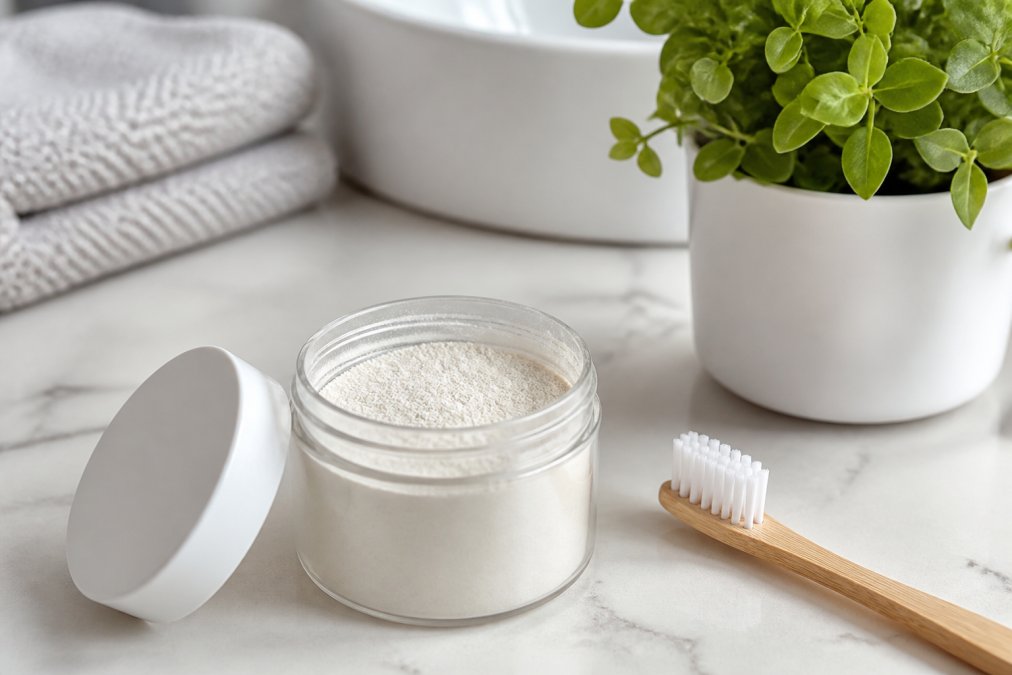
Unlike conventional toothpaste that relies on harsh abrasives and chemical detergents, PROTEITH® cleanses through enzymatic action. Its proteolytic technology targets the protein matrix binding plaque and stains to teeth, breaking them down gently without scratching enamel or irritating gums.
The formula is fluoride-free and now includes xylitol for enhanced cavity protection. It contains no SLS, no artificial additives, and no harsh abrasives. Users report fresher breath, cleaner teeth, and noticeable improvements in gum condition, including reduced bleeding and fewer mouth irritations.
At $14.00 per 1.6 oz jar, PROTEITH® costs more than drugstore toothpaste. Its value lies in its dual function: it is the first oral hygiene product that also works as a dietary supplement, with ingredients absorbed systemically to support immune function and long-term wellness.
| Feature | PROTEITH® Healthy Gums | Conventional Toothpaste |
|---|---|---|
| Cleansing mechanism | Proteolytic enzymes | Surfactants and abrasives |
| Fluoride content | Fluoride-free | Often fluoride-based |
| SLS content | SLS-free | Commonly contains SLS |
| Microbiome impact | Supports beneficial bacteria | May disrupt bacterial balance |
| Additional benefit | Doubles as dietary supplement | None |
| Price | $14.00 per jar | Varies by brand |
Conclusion: Your Next Step to a Balanced Mouth
Switching to a microbiome friendly toothpaste is one of the most effective steps toward lasting oral health. The conventional approach of sterilizing your mouth with harsh chemicals is giving way to a more sophisticated understanding of oral ecology.
PROTEITH® offers a clinically validated solution that aligns with this modern perspective. Its proteolytic technology cleanses effectively without abrasives, its natural ingredients support rather than disrupt your oral microbiome, and its dual function as a dietary supplement extends benefits beyond your mouth. Get started with PROTEITH® and experience the difference a balanced oral ecosystem makes.
Frequently Asked Questions
What is the best toothpaste for your microbiome?
The best microbiome friendly toothpaste supports beneficial bacteria instead of wiping them out. Look for prebiotic nutrients, natural ingredients, and fluoride-free formulas. Avoid harsh antibacterial agents like chlorhexidine and SLS, which can disrupt your oral ecology. PROTEITH® Healthy Gums toothpowder is a strong option, as it uses natural, microbiome-friendly ingredients to support the balance of your oral ecosystem.
What ingredients should you avoid in microbiome-friendly toothpaste?
Steer clear of chlorhexidine and other strong antibacterial agents, as they can harm both good and bad bacteria, disrupting your oral microbiome. Sodium lauryl sulfate (SLS) can irritate sensitive gums. Artificial sweeteners and harsh abrasives are also best avoided. Instead, look for natural ingredients like xylitol, hydroxyapatite, and prebiotic nutrients that support a healthy oral ecosystem.
Do holistic dentists recommend fluoride-free toothpaste?
Many holistic dentists do recommend fluoride-free options, but not all. Their focus is on biocompatible, natural ingredients that support whole-body health. They often suggest toothpaste with hydroxyapatite, which aids remineralization without fluoride. The choice depends on your individual risk for cavities. Discuss your specific oral health needs with your dentist to determine if a fluoride-free microbiome friendly toothpaste is right for you.
How do I know if my toothpaste is microbiome-friendly?
Check the ingredient list for prebiotic nutrients and natural ingredients that nourish beneficial bacteria. It should be free from harsh antibacterial agents like chlorhexidine and triclosan, and ideally SLS-free. Look for terms like "microbiome-friendly," but also verify the science. A product that supports bacterial balance and oral ecology, rather than simply killing all bacteria, is a good sign of a microbiome-friendly formula.
This article was written using GrandRanker

