

How to Link Periodontal Pathogens to Heart Health Risk
Quick Summary
Periodontal pathogens are bacteria that colonize the pocket between gum and tooth, and inflamed gum tissue can let them enter the bloodstream. Once there, they trigger systemic inflammation, which is a recognized factor in cardiovascular risk. Researchers are still working to map exactly how this connection works.
- Bleeding gums during brushing are a signal worth acting on, not ignoring.
- Inflamed gum tissue can allow bacteria to enter circulation, a process called bacterial translocation.
- Elevated C-reactive protein can appear in people with active periodontitis.
- Keep scheduled dental cleanings, typically every six months or as your dentist advises.
- Stop smoking if you use tobacco, since it impairs gum healing.
Table of Contents
- How Periodontal Pathogens Reach the Bloodstream
- Systemic Inflammation as the Shared Link Between Gums and the Heart
- The Oral Microbiome and Immune Response
- Symptoms of Gum Disease and When to See a Dentist
- Daily Oral Care Habits That Support a Healthier Microbiome
- Nutrition and Stress Management in the Gut-Oral-Immune Axis
- Evaluating Probiotic-Based Oral Care Products
- Building a Gum Health Routine to Discuss With Your Dentist
- Frequently Asked Questions
How Periodontal Pathogens Reach the Bloodstream
Last Updated: November 4, 2026
The link between periodontal pathogens and heart health is one of the most studied questions in oral medicine, and it is also one of the most misunderstood. Many Americans assume gum disease stays in the mouth. Research increasingly suggests it does not. This article examines how the bacteria driving gum disease may travel beyond the gumline and what that could mean for cardiovascular risk.
Periodontal pathogens are bacteria that colonize the pocket between the gum and the tooth. Within that pocket, inflamed tissue can open a route into the bloodstream. Dentists describe this as bacterial translocation, and it is the first step in a chain of events that researchers are still working to map.
Most people never notice this happening. Bleeding gums during brushing are often dismissed as a minor irritation, which is why the link is easy to overlook.
Gum Inflammation and Bacterial Translocation
Inflamed gum tissue is more permeable than healthy tissue. When the lining of a periodontal pocket ulcerates, bacteria and their byproducts can enter circulation. Studies on bacteria such as Porphyromonas gingivalis have detected these organisms in arterial plaque, which is one reason researchers take the question seriously.
The practical takeaway is simple: bleeding gums are a signal worth acting on, not something to ignore. A dental professional can measure pocket depth and recommend a treatment plan based on what they find.
Systemic Inflammation as the Shared Link Between Gums and the Heart
Once bacteria or their products reach the bloodstream, the body mounts an inflammatory response. That response does not stay local. Circulating inflammatory markers, including C-reactive protein, can rise in people with active periodontitis, and elevated inflammation is a recognized factor in cardiovascular risk.
This is the central idea connecting the two systems. The mouth is not a separate compartment; it is a source of ongoing immune activity that the rest of the body has to respond to.
Consider a practical scenario. Someone with untreated periodontitis may have chronic low-grade inflammation that persists between dental visits. Adding this to other risk factors such as high blood pressure or elevated cholesterol creates a compounding effect that is hard to measure in isolation.
The Oral Microbiome and Immune Response
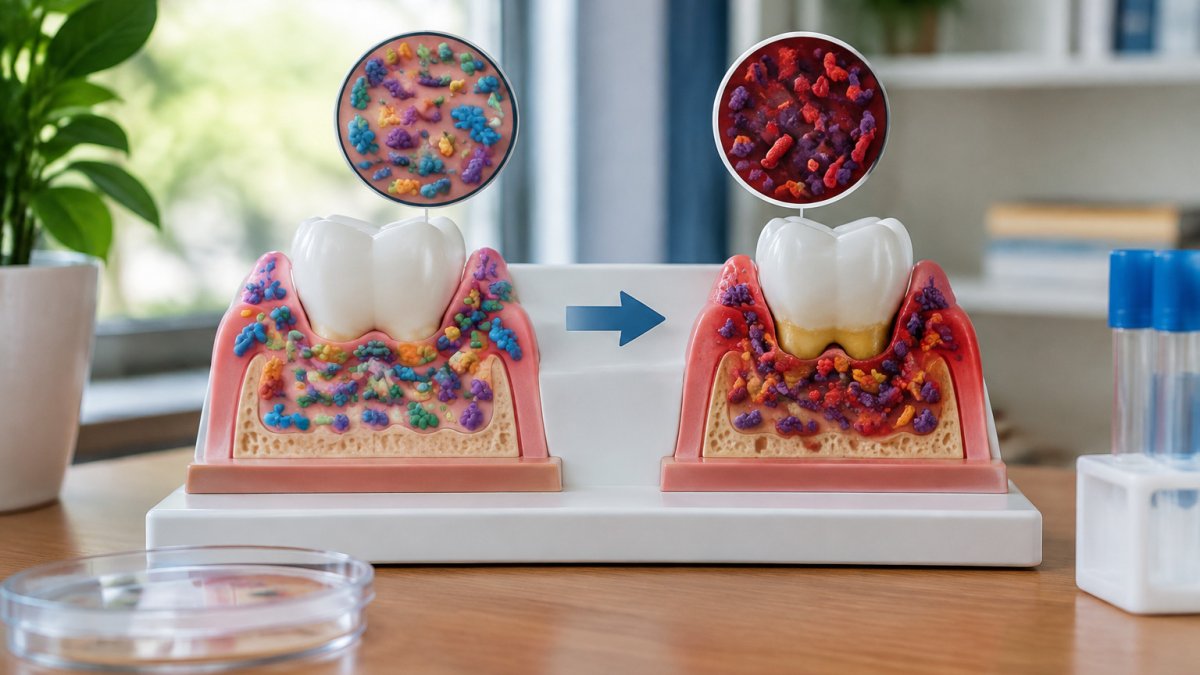
The mouth hosts hundreds of bacterial species forming a community called the oral microbiome. In health, these communities exist in a balanced state, with harmless and beneficial species holding the inflammation-provoking ones in check. In periodontal disease, that balance tips toward species that provoke the immune system, a state called dysbiosis. Because dysbiosis fuels inflammation, treating gum inflammation can help restore a healthier balance in the oral microbiome.
The shift is not random. It follows a recognizable pattern that researchers call the keystone-pathogen model.
Once dysbiosis takes hold, the immune system responds with a cascade of signaling molecules. Immune cells in the gum tissue release cytokines such as interleukin-1, interleukin-6, and tumor necrosis factor-alpha, which recruit more immune cells and increase local blood flow, the redness, swelling, and bleeding patients notice. Matrix metalloproteinases released in the same response break down collagen in the periodontal ligament and, over time, the alveolar bone that anchors teeth.
The immune response also has a systemic arm. When cytokines and bacterial products enter circulation, the liver responds by producing acute-phase proteins, including C-reactive protein. This is why active periodontitis can show up as elevated systemic inflammatory markers, the same markers clinicians track when assessing cardiovascular risk. Read more about how the oral microbiome affects the immune system.
A common mistake is to think of the microbiome as something to eliminate. Complete sterilization is neither realistic nor desirable, the goal is restoring balance, which is where the daily habits discussed later come in.
Ask your dentist whether a given rinse or supplement supports balance or simply suppresses everything.
Symptoms of Gum Disease and When to See a Dentist
Gum disease often progresses quietly. Watch for these warning signs:
- Gums that bleed during brushing or flossing
- Red, swollen, or tender gum tissue
- Gums pulling away from the teeth
- Persistent bad breath or an unpleasant taste
- Loose teeth or changes in how your bite fits together
Make an appointment if bleeding or swelling continues for more than a week or two. Early gingivitis is generally reversible with professional cleaning and consistent home care (the CDC). Periodontitis requires ongoing management.
PROTEITH® Oral Hygiene System for Healthy Gums – All-Natural Toothpowder →
The article lists the warning signs of gum disease and when to act on them, which can be scanned at a glance.
| Warning sign | What it may indicate | When to act |
|---|---|---|
| Gums that bleed during brushing or flossing | Often early gingivitis | If bleeding continues for more than a week or two |
| Red, swollen, or tender gums | Inflamed gum tissue | If it persists for more than a week or two |
| Gums pulling away from teeth | Progressing periodontal disease | Make a dental appointment |
| Persistent bad breath or unpleasant taste | Ongoing gum infection | Make a dental appointment |
| Loose teeth or changed bite | Advanced periodontitis | Make a dental appointment |
Daily Oral Care Habits That Support a Healthier Microbiome
A sound routine focuses on disrupting the bacterial film that builds up along the gumline:
- Brush twice daily with a soft-bristled brush, angling toward the gumline.
- Clean between teeth every day with floss or an interdental brush.
- Limit frequent sugar intake, since sugar feeds the species linked to inflammation.
- Keep scheduled dental cleanings, typically every six months or as your dentist advises.
- Stop smoking if you use tobacco, as it impairs gum healing.
Many people find that a tooth powder fits well into a gentle routine. PROTEITH® offers a Gum and Tooth Powder priced at $14.00, formulated as a plant-powered, fluoride-free option made with xylitol. Use it alongside, not in place of, the brushing and flossing your dentist recommends. You can review the all-natural PROTEITH® oral hygiene system for healthy gums to see how it is used.

Nutrition and Stress Management in the Gut-Oral-Immune Axis
Diet and stress both influence systemic inflammation, which links back to gum tissue. Most articles stop at that sentence. The useful question is what a person can actually change, and the answer is more concrete than "eat better and relax."
Nutritional interventions with a plausible oral-systemic effect. The Mediterranean-style eating pattern is the most studied dietary approach for lowering systemic inflammatory markers, and it maps well onto gum health. In practice that means:
- Replace refined carbohydrates with fiber-rich ones. Frequent sugar and refined-starch intake feeds the acid-producing and inflammation-provoking species in dental plaque. Swapping white bread, sweetened drinks, and frequent snacks for whole grains, legumes, and vegetables reduces the substrate those species depend on.
- Increase omega-3 intake. Fatty fish such as salmon, sardines, and mackerel, plus walnuts and flaxseed, supply omega-3 fats associated with lower C-reactive protein levels in observational research. For people who do not eat fish, talk with a clinician about whether a supplement fits.
- Prioritize vitamin C and vitamin D adequacy. Vitamin C is involved in collagen maintenance in gum tissue; vitamin D status is associated with periodontal health in observational studies. Food sources include citrus, peppers, and fortified dairy or plant milks, but deficiency is common enough that testing is worth discussing with a physician.
- Limit ultra-processed foods and added sugar. The Dietary Guidelines for Americans recommend keeping added sugars under 10% of daily calories; for gum health specifically, the frequency of sugar exposure matters as much as the total, because repeated snacking keeps plaque bacteria producing acid.
- Stay hydrated and favor water between meals. Water supports saliva flow, and saliva is the mouth's natural buffer and cleaning system.
A practical pattern many patients adopt is to concentrate carbohydrates around meals rather than grazing all day, finish meals with water or a fibrous food, and keep sugary drinks to occasional rather than daily use. None of this replaces professional periodontal treatment; it lowers the inflammatory load the treatment is working against.
Stress and the cortisol pathway. Chronic stress elevates cortisol, and cortisol affects immune regulation in ways that matter for gum tissue. Sustained cortisol exposure can dampen some aspects of immune defense while amplifying inflammatory signaling, and it is associated with impaired wound healing, relevant because periodontal treatment depends on the tissue's ability to heal. Stress also changes behavior in ways that compound the problem: people under sustained stress may neglect brushing and flossing, clench or grind their teeth, smoke more, and sleep less. Each of those independently affects gum health.
Stress management therefore belongs in a gum health plan, not in a separate category. Sleep duration and consistency, regular moderate exercise, and structured relaxation practices are the levers with the most consistent evidence. For patients whose stress is tied to a diagnosed anxiety or mood condition, coordinating with a primary care clinician or therapist is part of the oral care picture, not a detour from it.
Dietary Guidelines for Americans, added sugars recommendation
Evaluating Probiotic-Based Oral Care Products
Oral probiotics are marketed as a way to support the microbiome, but the evidence base is still developing. Before buying, check whether a product lists specific strains, whether it has been studied in clinical settings, and whether it fits your overall routine. Review the clinical studies on oral probiotics to see what the published research shows. Any product should be judged on its published evidence and on how it fits alongside professional care. For a direct comparison, see oral probiotics versus traditional mouthwash for systemic health. Discuss options with your dentist before making them a substitute for established treatments.
Building a Gum Health Routine to Discuss With Your Dentist
Bring these questions to your next appointment:
- What is my current pocket depth, and has it changed?
- Do my bleeding gums indicate gingivitis or periodontitis?
- Should I add an interdental cleaner or a specific toothbrush?
- Are any of my medications affecting my gums?
- How often should I return for cleanings?
Because periodontal disease and heart health are connected through systemic inflammation, discussing your cardiovascular risk with your physician alongside your dentist gives you the most complete picture.
Frequently Asked Questions
What autoimmune disease is linked to gum disease?
Several autoimmune conditions have been studied alongside periodontitis, including rheumatoid arthritis, lupus, Sjögren's syndrome and Hashimoto's thyroiditis. Research points to shared pathways in which immune dysregulation and chronic inflammation affect both gum tissue and other organs. Research shows an association rather than a single cause, so people with an autoimmune diagnosis should share any gum symptoms with their dentist and their treating physician. Regular periodontal exams help catch changes early.
Can gum disease be reversed?
Early gum inflammation, known as gingivitis, is generally reversible with professional cleaning and consistent home care. Periodontitis involves bone and tissue loss that cannot be fully regenerated, but its progression can often be slowed and controlled. Brushing along the gumline, cleaning between teeth and keeping dental visits on schedule are the core steps. Persistent bleeding, swelling or loose teeth should be assessed by a dental professional as soon as possible.
How does the oral microbiome influence heart health?
The mouth hosts a large community of bacteria, and when periodontal pathogens dominate, inflamed gum tissue can allow bacteria and inflammatory mediators to enter the bloodstream. This is one proposed pathway linking gum disease to cardiovascular risk factors such as elevated C-reactive protein. The evidence shows association, and researchers continue to study whether treating gum disease changes cardiovascular outcomes. Maintaining healthy gums through daily cleaning supports a balanced oral microbiome.
Is probiotic-based oral care effective for gum health?
Some probiotic-based oral care products aim to support a balanced oral microbiome, but the strength of the clinical evidence varies by product and by study. Results from small or manufacturer-funded studies should be read cautiously. Probiotic products are not a substitute for brushing, flossing and professional dental care. Check with a dentist before relying on any oral care product to manage gum disease.
Talk to your dentist or physician before changing your oral care routine, especially if you have a heart condition, take blood thinners, or have been diagnosed with periodontitis.


