

Can You Keep Teeth White After Professional Whitening?
Last Updated: October 29, 2026
Quick Summary
To keep teeth white after professional whitening, follow a white-and-clear diet for the first 24 hours, skipping coffee, tea, red wine, dark soda, berries, beets, and tomato sauce. Then brush gently twice a day with a soft brush and floss daily to build stain-resistant habits.
- Skip all dark foods and drinks during the first 6 hours after whitening.
- Keep the white-and-clear diet through hour 24 and rinse with plain water after eating.
- Custom tray users should stay on the white diet for the full course plus 48 hours after the last tray.
- Sensitivity usually peaks in the first 24 to 72 hours after in-office treatment and fades within a week.
- Avoid very hot or cold drinks for a few days and do not stack whitening products.
Table of Contents
- Your First 48 Hours: The Aftercare Timeline That Protects Whitening Results
- What to Eat After Teeth Whitening (and What to Skip)
- The Toothpaste to Use After Professional Whitening
- Teeth Whitening Sensitivity Aftercare: Calming Discomfort Without Losing Results
- Brushing, Flossing, and Rinsing: Daily Habits That Preserve a White Smile
- How Long Professional Teeth Whitening Lasts and How to Plan Touch-Ups
- Build Your Stain-Prevention Routine with PROTEITH®
- Frequently Asked Questions
Your First 48 Hours: The Aftercare Timeline That Protects Whitening Results
How to keep teeth white after professional whitening comes down to your daily habits, but the right moves depend on which whitening method you had.
Here is a practical timeline, plus method-specific adjustments.
Hours 0-6: The Most Absorbent Window
Skip all dark foods and drinks. That means no coffee, tea, red wine, dark soda, tomato sauce, berries, beets, or soy sauce.
Stick to water and plain, light-colored foods. Avoid smoking and all tobacco. Follow your dentist's instructions about brushing after whitening.
Hours 6-24: Hold the Line
Keep the same white-and-clear diet. Rinse with plain water after anything you eat or drink.
Days 2-14: Build Stain-Resistant Habits
Brush gently twice a day with a soft brush and floss daily.
Adjust for Your Whitening Method
- In-office whitening (chairside): The highest immediate sensitivity and porosity. Follow the 0-24 hour restrictions strictly, and expect your dentist to send you home with desensitizing instructions.
- Dentist-provided custom trays: Sensitivity often peaks in the first few days of the course. Keep the white diet for the full course and for 48 hours after the last tray, not just after the first one.
- Over-the-counter strips, pens, or trays: Lower concentration but repeated use. Apply the same 48-hour stain guard after each application window, and do not stack multiple products at once.
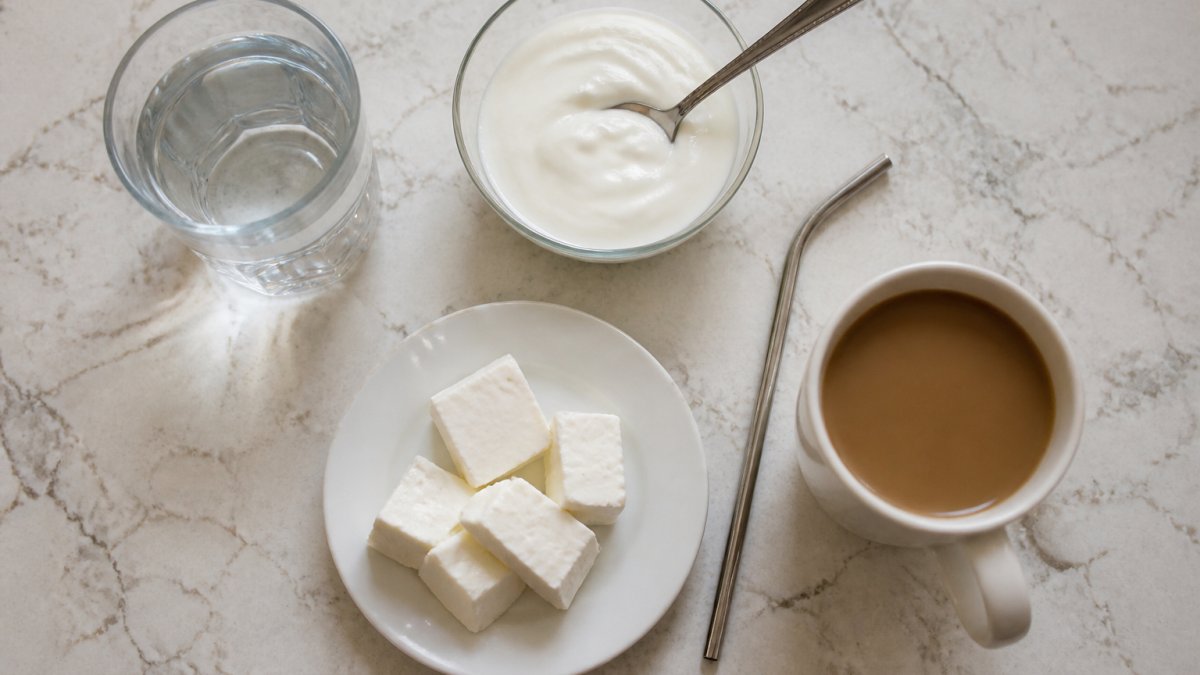
Here is the aftercare timeline the article lays out for protecting whitening results.
| Timeframe | What to do |
|---|---|
| Hours 0-6 | Skip dark foods and drinks; water and light-colored foods only |
| Hours 6-24 | Keep white-and-clear diet; rinse with plain water after eating or drinking |
| Days 2-14 | Brush gently twice a day with a soft brush; floss daily |
| In-office whitening | Follow 0-24 hour restrictions strictly; expect desensitizing instructions |
| Custom trays | Keep white diet for full course and 48 hours after last tray |
| OTC strips, pens, trays | Apply 48-hour stain guard after each application window |
What to Eat After Teeth Whitening (and What to Skip)
What to eat after teeth whitening matters as much as what you avoid. White and clear foods protect tooth color, while dark foods and drinks set stains into fresh enamel. Here is the simple split.
White and Clear Foods That Protect Tooth Color
- Low-fat yogurt and white cheese
- Cauliflower, potatoes, and white rice
- Bananas and peeled apples
- Plain chicken and white fish
- Water, milk, and clear broths
Staining Foods and Beverages to Avoid
- Coffee, tea, and red wine
- Dark soda and fruit juice
- Berries, beets, and tomato-based sauces
- Soy sauce, curry, and mustard
- Tobacco and smoking
According to the American Dental Association's guidance on whitening, avoiding stain-causing foods right after treatment helps protect results.
The Toothpaste to Use After Professional Whitening
A plant-powered toothpowder like PROTEITH® Healthy Gums is fluoride-free, made with xylitol, and uses proteolytic technology in a formula designed for daily oral care without harsh abrasives.
If you want to understand why that matters, our guide on proteolytic enzymes for teeth explains how they work. You can also shop the gum and tooth powder directly.

Teeth Whitening Sensitivity Aftercare: Calming Discomfort Without Losing Results
Teeth whitening sensitivity aftercare is about easing discomfort without undoing your results. Mild, temporary sensitivity is common because whitening agents open the microscopic pores in enamel and reach the dentin layer, where nerve endings sit. Most people feel it as a brief twinge with cold drinks or a dull ache in the first few days.
PROTEITH® Oral Hygiene System for Healthy Gums – All-Natural Toothpowder →
What to Expect
- Timing: Sensitivity usually peaks in the first 24-72 hours after in-office treatment, or during the first few days of a tray or strip course.
- Duration: Most cases fade within a week. Tray and strip users may notice it recurring with each application.
- Severity: A twinge with cold or a mild ache is typical. Sharp, spontaneous pain or pain that wakes you up is not.
Practical Steps That Help
- Use a soft-bristled brush and light pressure.
- Switch to a gentle, low-abrasion toothpaste during recovery.
- Avoid very hot or very cold drinks for a few days; room-temperature water is easier on teeth.
- Rinse with plain water.
- Do not stack whitening products. Pause at-home whitening until discomfort settles.
- Ask your dentist about a desensitizing gel or fluoride varnish if sensitivity is strong.
When to Call Your Dentist
Contact your dentist if you have concerns after whitening.
For readers dealing with ongoing sensitivity, our guide on the best natural toothpaste for sensitivity covers gentler daily options.
Brushing, Flossing, and Rinsing: Daily Habits That Preserve a White Smile
Brushing, flossing, and rinsing are daily oral-care habits.
Brush with a soft brush and floss daily. Regular dental cleanings remove surface stains that build up over time.
Clean gently along the gumline.
How Long Professional Teeth Whitening Lasts and How to Plan Touch-Ups
Our guide on natural ways to remove teeth stains lists methods you can use between appointments.
Build Your Stain-Prevention Routine with PROTEITH®
Stain prevention is a daily habit, not a one-time fix.
PROTEITH® offers a plant-powered toothpowder made with xylitol and designed for daily oral care without harsh abrasives. Our oral hygiene system gives you a toothpowder option.
Frequently Asked Questions
How long do professional teeth-whitening results last?
Keeping teeth white after professional whitening is mostly about daily habits rather than a single treatment.
What toothpaste should you use after professional whitening?
A fluoride-free, plant-based option such as PROTEITH® Healthy Gums toothpowder ($14.00) is made with xylitol and uses proteolytic technology in a formula designed for daily oral care without harsh abrasives. If your dentist has recommended fluoride, follow that guidance instead.
Does teeth whitening cause sensitivity, and what can help?
If you have concerns about sensitivity after whitening, ask your dentist for guidance.
Can you brush your teeth right after professional whitening?
Follow your dentist's specific instructions about brushing after whitening. If you have concerns, contact your dental office.
Keeping teeth white after professional whitening takes consistency more than effort. Build the 48-hour guard, choose gentle products, and stay ahead of stains. Get started with PROTEITH® and protect your bright smile with plant-powered daily care.


